



ChatGPT is still one of the strongest all-purpose AI assistants on the market. But if you are specifically looking for ChatGPT alternatives, the best option depends on what you actually need.
Some tools beat ChatGPT at research. Some are better for coding. Some are built for teamwork, publishing, or brand consistency. And if your goal is not just generating text but running a full content workflow, a specialized AI marketing agent or a structured AI content strategy will get you further than a general chatbot alone.
This guide covers the best free and paid ChatGPT alternatives in 2026, with a stronger focus on real use cases, current product positioning, and what each tool does better than a generic chat interface.
Quick answer: The best ChatGPT alternatives at a glance
| StoryChief AI | Marketing workflows and content operations | Yes | €19/month |
|---|---|---|---|
| Claude | Long-form writing and reasoning | Yes | $20/month |
| Perplexity | Research with sources | Yes | $20/month |
| Gemini | Google ecosystem users | Yes | Paid plan available |
| Microsoft Copilot | Microsoft 365 productivity | Limited/free options | $30/user/month for Microsoft 365 Copilot |
| Meta AI | Casual use and social discovery | Yes | Free |
| DeepSeek | Reasoning and low-cost experimentation | Yes | Free web use; API priced separately |
| Le Chat | Fast multimodal work and document analysis | Yes | Pro plan available |
| GitHub Copilot | Coding help inside your editor | Yes, limited | $10/month |
| Jasper | Brand-led marketing content | No permanent free plan | $59/user/month billed yearly |
| Copy.ai | GTM and sales automation | No true free self-serve focus | $29/month |
| Poe | Testing multiple models in one place | Yes | Paid subscription available |
What to look for in a ChatGPT alternative
A lot of “best ChatGPT alternatives” lists treat every tool like it solves the same problem. It does not.
The better way to compare them is by asking five simple questions:
- What is your main job to be done? Research, writing, coding, campaign planning, customer support, or productivity all require different strengths.
- Do you need live web access? If current information matters, tools like Perplexity, Gemini, Meta AI, and Le Chat are often more practical.
- Do you work alone or with a team? Solo chat tools are very different from products built around approvals, brand voice, and distribution.
- Do you need one great model or many? Some people want the best single assistant. Others want to compare models side by side.
- Do you need output, or a workflow? If your real bottleneck is briefs, reviews, publishing, and repurposing, the tool needs to do more than answer prompts.
That last point matters a lot for marketers. If you are planning campaigns across blog, social, and SEO, tools built for content workflow management or multi-channel publishing will usually create more business value than a standalone chatbot.
12 best ChatGPT alternatives in 2026
1. StoryChief AI Agent
Best for: Marketers, content teams, agencies, and multi-channel publishing
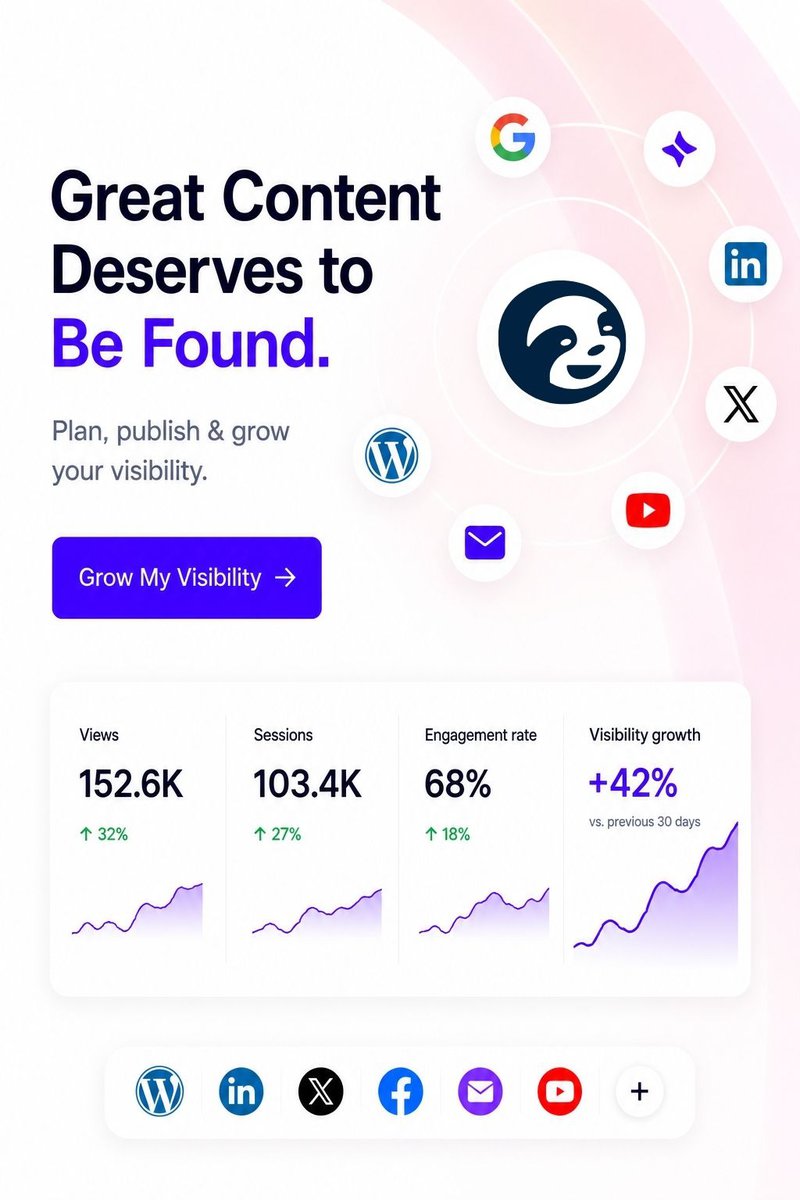
If you want a ChatGPT alternative for marketing, StoryChief AI is not just another prompt box. It is built around the full content workflow: strategy, drafting, optimization, collaboration, approvals, and distribution.
That makes it a better fit than ChatGPT for teams that need to turn ideas into actual published campaigns. You can go from content planning to blog writing to social distribution in one place, instead of stitching together multiple tools.
What stands out most is that StoryChief goes beyond text generation. It helps with SEO direction, channel adaptation, workflow visibility, and publishing execution. If your team is building an SEO content calendar or comparing broader AI writing tools, that difference matters.
Pros
- Built for real marketing workflows, not just brainstorming
- Strong fit for teams that publish across multiple channels
- Helps keep brand voice, approvals, and collaboration in one place
- Combines AI support with content operations
Cons
- Less useful if you only want a general chatbot for random questions
- Overkill for users who do not publish content regularly
Pricing: Free plan available. Paid plans start at €19/month, with editorial team plans higher depending on setup.
✅ Related: How to use AI to write content that ranks →

2. Claude
Best for: Long-form writing, reasoning, and document-heavy work
If you want the closest all-purpose alternative to ChatGPT, Claude is one of the safest picks. It is especially strong for thoughtful writing, summarization, strategy work, and analyzing long documents.
Claude tends to feel calmer and more structured than many competitors. It is a strong choice for people who want fewer gimmicks and better output quality on writing-heavy tasks.
It is also a good fit for users who need to upload files, work through nuanced prompts, or maintain a more natural tone in long responses.
Pros
- Excellent long-form writing and editing
- Strong reasoning and document analysis
- Good fit for researchers, strategists, and consultants
- Free plan available
Cons
- Not the best choice if you mainly want live web-first research
- Less workflow-oriented than specialized team tools
Pricing: Free plan available. Claude Pro starts at $20/month.
3. Perplexity
Best for: Research, citations, source-backed answers, and current information
Perplexity is one of the best ChatGPT alternatives if your biggest frustration with chatbots is not knowing whether the answer is current or sourced.
Instead of acting like a closed assistant, it behaves more like an AI-native research engine. That makes it ideal for market research, quick fact-checking, topic discovery, and building first-pass summaries with links you can verify.
For students, researchers, consultants, and marketers doing content research, this is one of the most practical tools on the list.
Pros
- Strong at current, web-connected answers
- Cites sources, which speeds up verification
- Good for research, comparisons, and discovery
- Pro plan unlocks stronger models and file handling
Cons
- Less suited for polished brand writing than Claude or Jasper
- Output tone can feel more functional than creative
Pricing: Free plan available. Perplexity Pro starts at $20/month.
4. Gemini
Best for: Google Workspace users and multimodal everyday work
Gemini is a strong choice if you already live inside Google products. It makes the most sense for people who move between Gmail, Docs, Sheets, Search, and Android throughout the day.
Compared with ChatGPT, Gemini often feels more useful when your workflow is tied to Google. It is also a strong option for users who want one assistant that can handle search, documents, images, and general productivity tasks.
For many people, Gemini is the easiest free alternative to try first.
Pros
- Strong fit for Google users
- Good multimodal capabilities
- Helpful for docs, files, and day-to-day productivity
- Free plan available
Cons
- Best experience depends on how much you use Google’s ecosystem
- Some premium features sit behind paid plans
Pricing: Free plan available. Premium Gemini plans are available through Google’s paid AI offerings.
5. Microsoft Copilot
Best for: Microsoft 365 users, office productivity, and enterprise work
If your workday lives in Word, Excel, Outlook, Teams, and Windows, Microsoft Copilot is one of the most natural ChatGPT alternatives you can choose.
It is less about replacing ChatGPT as a consumer chatbot and more about embedding AI into everyday business work. Drafting emails, summarizing meetings, analyzing spreadsheets, and pulling actions into Microsoft apps is where it stands out.
For enterprise teams already paying for Microsoft, Copilot often wins on convenience rather than pure model preference.
Pros
- Strong Microsoft 365 integration
- Useful for email, meetings, documents, and spreadsheets
- Enterprise-friendly positioning
- Free and paid entry points available
Cons
- Best value shows up inside the Microsoft ecosystem
- Less appealing if you do not use Microsoft apps heavily
Pricing: Copilot Chat has free entry points for eligible users. Microsoft 365 Copilot is priced from $30/user/month for business use.
6. Meta AI
Best for: Casual use, social-native discovery, and consumer convenience
Meta AI has become a more serious alternative than many people expected. If you spend a lot of time inside Instagram, Facebook, Messenger, or WhatsApp, it offers a very low-friction way to use AI without switching tools.
Its biggest advantage is accessibility. You can ask for recommendations, get help with everyday questions, create images, and use it across Meta’s own apps and devices.
It is not the most advanced writing or business tool here, but for casual use it is one of the easiest free ChatGPT alternatives to adopt.
Pros
- Very easy to access inside Meta apps
- Useful for quick questions and consumer-style tasks
- Free to use
- Good fit for casual users who do not want another subscription
Cons
- Not ideal for structured business workflows
- Less specialized for long-form writing or professional teams
Pricing: Free.
7. DeepSeek
Best for: Reasoning, experimentation, and cost-conscious users
DeepSeek earned attention because it delivers a lot of value for very little cost, especially for users interested in reasoning-heavy tasks, technical questions, or open model experimentation.
If you want a free alternative to ChatGPT that feels capable on structured problem-solving, it is worth testing. It is also relevant for builders and teams looking at API economics.
That said, it is not always the best choice for polished team collaboration, brand content, or trust-sensitive research.
Pros
- Strong value for reasoning-style tasks
- Free web access makes it easy to test
- Attractive for developers and experimental users
- Low-cost API positioning
Cons
- Less polished as a full product experience than top consumer rivals
- Not the best fit for brand-sensitive marketing output
Pricing: Free on the web. API pricing is usage-based.
8. Le Chat by Mistral
Best for: Fast multimodal work, web search, docs, and flexible productivity
Le Chat is one of the more underrated ChatGPT alternatives right now. It combines chat, web search, document analysis, image generation, and code tools in a clean experience that feels lighter than some of the bigger-name platforms.
It is especially interesting for people who want a modern assistant without locking themselves into OpenAI, Google, or Microsoft. It also gives Mistral a useful consumer entry point beyond pure model access.
For users who want a fresh, capable general assistant, Le Chat deserves a spot on the shortlist.
Pros
- Strong balance of speed and features
- Supports chat, search, files, and code-related tasks
- Good free starting point
- Useful for both personal and professional work
Cons
- Smaller ecosystem than Google or Microsoft
- Still less top-of-mind for mainstream users
Pricing: Free plan available. Pro and enterprise plans are available.
9. GitHub Copilot
Best for: Developers and coding assistance inside the IDE
GitHub Copilot is still one of the strongest specialized alternatives on this list. If your main use case is coding, debugging, explaining snippets, and accelerating development inside your editor, it is usually a better fit than ChatGPT.
The big advantage is context. GitHub Copilot works closer to where developers actually ship work, which makes it more useful than switching back and forth between a browser chatbot and an IDE.
For software teams, this is less of a “ChatGPT alternative” and more of a coding productivity layer.
Pros
- Native fit for coding workflows
- Strong value inside VS Code and other supported editors
- Helpful for suggestions, explanations, and repetitive code tasks
- Free tier and student access available
Cons
- Not meant for general knowledge work
- Best results still require human judgment and technical experience
Pricing: Limited free plan available. Copilot Pro starts at $10/month.
10. Jasper
Best for: Brand voice, campaign content, and marketing teams
Jasper remains relevant because it is not trying to be everything for everyone. It is focused on helping marketing teams produce on-brand content faster.
That makes it a better alternative than ChatGPT for businesses that care about campaign consistency, repeatable messaging, and structured marketing use cases. It is especially useful when several people need to create content without drifting off-brand.
If your team creates landing pages, ad copy, emails, and campaign assets at scale, Jasper is still a serious contender.
Pros
- Built with marketers in mind
- Strong emphasis on brand consistency
- Good for campaigns, ads, and repeatable content formats
- Better fit than general chat tools for marketing governance
Cons
- Less flexible for general-purpose chat use
- Higher cost than many consumer AI assistants
Pricing: No permanent free plan. Jasper Pro starts at $59/user/month billed yearly, or $69 monthly.
11. Copy.ai
Best for: GTM workflows, outbound, and sales-marketing automation
Copy.ai has shifted from being “just another AI copywriter” into a more operational GTM platform. That makes it useful for teams that want AI to support prospecting, messaging, and repetitive go-to-market processes.
It is less about open-ended chatting and more about workflow execution. If that is your real need, it can outperform ChatGPT simply by being more focused.
It also makes sense for revenue teams that want AI help across sales and marketing, not only content creation.
Pros
- Better suited to GTM workflows than generic chatbots
- Stronger fit for sales and marketing operations
- Helpful for repetitive messaging and automation use cases
- Clearer business workflow orientation than consumer assistants
Cons
- Less appealing for casual users
- Can feel heavy if you only need simple writing help
Pricing: Chat plan starts at $29/month. Higher workflow and enterprise tiers increase from there.
12. Poe
Best for: Comparing multiple models in one place
Poe is ideal if you do not want to commit to a single AI provider. It gives you access to multiple leading models in one interface, which is great for side-by-side testing, prompt experimentation, and finding the right model for each task.
That makes it a smart option for power users, prompt tinkerers, and teams exploring model quality before settling on a stack.
It is not the best workflow tool on this list, but it is one of the most flexible.
Pros
- Access to many models in one place
- Great for testing and comparison
- Useful for prompt experimentation
- Good option for AI enthusiasts and advanced users
Cons
- Not purpose-built for a single workflow
- Best value depends on how often you switch between models
Pricing: Free plan available. Paid subscription options vary by usage tier.
ChatGPT alternatives compared by use case
| Best overall all-purpose alternative | Claude | Strong writing, reasoning, and document handling |
|---|---|---|
| Best for research | Perplexity | Source-backed answers and current web results |
| Best for marketers | StoryChief AI | Strategy, drafting, SEO, approvals, and distribution in one workflow |
| Best for Google users | Gemini | Natural fit with Google apps and search |
| Best for Microsoft users | Microsoft Copilot | Built into the tools many teams already use |
| Best free consumer option | Meta AI | Easy access and zero-cost entry across Meta apps |
| Best for reasoning on a budget | DeepSeek | High value for free and low-cost experimentation |
| Best for developers | GitHub Copilot | Works directly inside coding environments |
| Best for brand-led campaign teams | Jasper | Stronger brand control than a generic chatbot |
| Best for trying many models | Poe | Lets you compare tools without juggling subscriptions |
Which ChatGPT alternative should you choose?
If you want the simplest answer, start here:
- Choose Claude if you want the strongest writing-and-reasoning replacement for ChatGPT.
- Choose Perplexity if you need current information and cited research.
- Choose Gemini if your digital life already runs on Google.
- Choose Microsoft Copilot if your company runs on Microsoft 365.
- Choose GitHub Copilot if coding is your main job.
- Choose StoryChief AI if your actual goal is creating, optimizing, approving, and publishing marketing content at scale.
That last distinction matters. Many marketers search for ChatGPT alternatives when the real problem is not “Which chatbot writes better?” It is “How do I create content faster without losing SEO quality, brand consistency, or workflow control?” In that scenario, looking at AI marketing agents or an end-to-end platform is usually more useful than comparing chat windows alone.
Final verdict
There is no single best ChatGPT alternative for everyone.
For most people, Claude is the strongest general alternative. Perplexity is the best research-first option. Gemini and Microsoft Copilot are the best ecosystem plays. GitHub Copilot is the best developer option. And for marketing teams, StoryChief AI is the best choice when you need an AI assistant that actually helps move content from idea to published campaign.
If your work depends on consistent publishing, SEO, approvals, and channel adaptation, the better question is not “Which chatbot is smartest?” It is “Which tool helps my team produce better results?”
That is exactly where StoryChief stands out.
FAQs about ChatGPT alternatives
What is the best ChatGPT alternative in 2026?
If you want the closest all-purpose alternative, Claude is one of the best options in 2026. If you care more about research and current information, Perplexity is often the better choice.
What is the best free ChatGPT alternative?
The best free ChatGPT alternative depends on your use case. Meta AI is a strong no-cost option for casual users, DeepSeek is great for reasoning-heavy experimentation, and Gemini is one of the easiest free tools for general productivity.
What is the best ChatGPT alternative for marketers?
For marketers, StoryChief AI is the strongest alternative because it does more than generate text. It supports planning, SEO, collaboration, approvals, and multi-channel publishing in one workflow.
What is the best ChatGPT alternative for coding?
GitHub Copilot is usually the best ChatGPT alternative for coding because it works directly inside the developer workflow and provides suggestions, completions, and coding help where you actually build.
Which ChatGPT alternative is best for research?
Perplexity is one of the best research-focused alternatives because it combines AI answers with web search and source visibility. Le Chat and Gemini are also strong options if you want web-connected results.
Is there a ChatGPT alternative better for team workflows?
Yes. If your work depends on approvals, shared brand standards, publishing, or cross-functional collaboration, specialized team tools like StoryChief, Jasper, and Copy.ai can outperform ChatGPT for that specific workflow.
Should I replace ChatGPT completely?
Usually, no. Many teams use ChatGPT alongside other tools. The smarter move is to keep ChatGPT for general tasks and add a specialized alternative where it clearly performs better, whether that is research, coding, or content operations.