



I’ve run websites where, with Search Engine Optimization, we’ve had thousands of visitors per day.
I’ve also run websites that completely flopped and the only people who visited were me, myself, and Irene.
I’ve written articles that took me two months to create back before ChatGPT could lend a hand.
I’ve also used AI to build content outlines and draft posts that went on to rank number one for my target keywords.
Long story short, I’ve been in the SEO game for 10 years and I have experienced it both before AI and during AI.
In this post, I’m going to share which approach actually created more traffic in my 2025 experiments, drawn from over a decade of hands-on SEO experience.
1. Keyword Research
One of the main aspects I’ve done both before AI and during AI is keyword research.
On my previous websites, I used the traditional, tried-and-tested keyword research strategies that simply worked for me.
These included:
- Google Autofill. I would type in a keyword related to your topic into Google and note the autocomplete suggestions that appear (the phrases Google predicts you’re looking for). Those suggestions are often a strong signal of real search demand.
- People Also Ask – This section gives you a list of frequently asked questions straight from the SERPs. It’s a goldmine for content ideas and can help you add more valuable, search-validated questions to your blog posts.
- People Also Search For – Another great source of related search terms that often uncovers hidden angles and intent-based keywords you might have missed.
- Keyword Tools – Over the years, I’ve used Google Keyword Planner, and the more advanced tools like SEMrush and Ahrefs. These tools are great for seeing search volume, competition levels, and keyword trends — but even with all these insights, keyword research still takes time and experience.
Regardless of the tool you use, SEO is a long game.
You’ll make mistakes, and you’ll need to put in the hours to really understand how to find and evaluate the right keywords for your niche and sharpen your tools.
Fast-forward to 2025, and that’s when I started using AI tools for keyword research.
One of the main tools I use now is ChatGPT’s Deep Research function.
You can type in a simple prompt, click the Deep Research button, and within 10 to 15 minutes, ChatGPT can pull a comprehensive keyword report complete with related terms, search intent, commercial value, and estimated volumes.
It’s the kind of research that used to take hours or days to do manually.
Now, you don’t have to be an expert to run it.
But the cold-hard, undeniable truth is that experience still wins.
Someone who’s been in the SEO trenches for years, who’s built sites that flopped and learned from those mistakes, will always have an edge.
They’ve developed instincts about what will rank, what’s worth targeting, and how to interpret keyword data beyond the numbers.
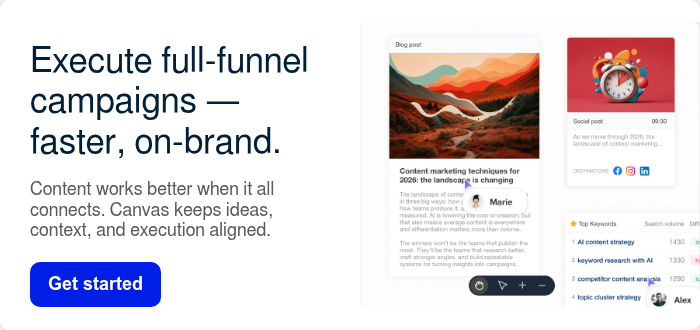
Tip: StoryChief AI automates keyword and competitor research, so you can find high-value opportunities, create content, collaborate, publish, and optimize — without needing SEO expertise.
2. Content Creation
Previously, my number one claim to fame as an SEO expert was ranking #2 in the United States for the keyword “fat loss.”
I was super proud of this because, as you probably know, the weight loss market is one of the most competitive industries in the world. To achieve that ranking in the U.S. was a huge accomplishment for me.
For context, the #1 spot fluctuates slightly, but most of the time it’s an article from Harvard University. So to even appear directly below Harvard still blows my mind.
The caveat? That article took me two full months to write.
It was a 15,000-word deep-dive that contained everything I used to lose 70 pounds and keep it off for more than seven years. It truly was a one-stop shop for anyone wanting to learn about fat loss.
And to think — all of that was written without any AI help whatsoever. The amount of research, editing, and writing that went into that article was massive, but the results made every hour worth it.
Now, fast-forward to today, and I use AI to assist with my content creation.
Because of my experience in SEO before the AI boom, I still prefer to create my content outlines manually. I build the structure, define the main points, and then use AI to validate and expand on what I’ve created.
The beautiful thing about AI is that I no longer ask it to “write” the article. Instead, I treat it like a conversation partner. I talk through my ideas, strategies, and experiences, and AI helps me format that conversation into a clean, well-structured, and presentable article.
With this method, I can now write a 10,000-word article in less than five days if I really focus.
Before AI, that same piece would have taken me at least a month to finish. And the quality hasn’t dropped — if anything, it’s improved, because AI helps me stay organized, clear, and consistent.
3. A Personal SEO Assistant
Here’s one area where AI has been an undeniable game-changer — using it as an SEO assistant.
Unless you’ve got coworkers who are also SEO experts sitting next to you every day, there’s rarely anyone to bounce ideas off of or get quick feedback from. That’s where AI fills a huge gap.
With AI, you can literally ask any question related to your SEO projects — whether it’s about on-page optimization, link-building strategy, or technical site audits — and get an instant opinion.
Now, here’s the caveat: it’s not always right.
There have been plenty of times where I’ve asked AI for SEO insights both because I genuinely wanted help, and (in parentheses) also because I wanted to see how often it makes mistakes.
And lo and behold, it makes mistakes pretty often.
If I had to put a number on it, I’d say for every hour I use AI for SEO, there are at least five mistakes I have to catch and fix. On average, it’s probably closer to 10 to 15 — maybe it gets a statistic wrong, maybe it states a “fact” I know isn’t true, or sometimes it gives an opinion that’s completely off-base.
If you’re not already experienced in SEO, you might not even notice these errors — and that’s exactly why you still need human expertise. Your background knowledge helps you filter what’s useful from what’s just AI noise.
But despite those flaws, using AI as a sounding board is something I wouldn’t trade for the world.
Being able to brainstorm with AI, test hypotheses, refine ideas, or even just talk through an SEO problem out loud — it’s an advantage that didn’t exist a few years ago.
For this, I use a combination of AI SEO tools, including StoryChief, Grok, Claude, the Deep Thinking function on DeepSeek, and of course ChatGPT. Each one has its strengths, and together they act as my personal SEO think tank.
So, Which Created More Traffic? AI or Human SEO?
So what’s the answer? I’ve done SEO before AI, and I continue to do SEO during the AI era. Using the strategies above — keyword research, content creation, and AI as a sounding board — which approach has generated more traffic in my 2025 experiments?
Honestly, neither has generated more traffic than the other.
AI is not a magic bullet. It can get things very, very wrong, so don’t think it’s some golden ticket that will instantly generate thousands of visitors on a website. The results I’ve seen are very much tied to the fundamentals of SEO, which remain the same regardless of the tools you use.
Here’s the key benefit of AI: speed and efficiency.
AI allows me to do all the same things I did before, but in a fraction of the time. Keyword research, content outlines, drafting, and even organizing my thoughts — AI can accelerate all of it dramatically.
If you’re already an experienced SEO, using AI is a game-changer. It won’t replace your expertise, but it will let you reach the same results much faster and more efficiently.
In short: AI doesn’t create better SEO results on its own — your experience, strategy, and understanding of SEO still matter most. But if you use AI wisely, it’s like having a supercharged assistant that helps you work smarter, not harder.
StoryChief Canvas enables marketers to plan, edit, and expand campaigns within a single visual workspace—automated, consistent with brand guidelines, and designed for practical marketing workflows. Try it free.