


Content marketing isn’t slowing down—but for small teams, time is the biggest constraint. In fact, only 40% of B2B marketers report having a documented content strategy, which can cause reactive workflows and inconsistent publishing.
Luckily, a focused content planning window can help your team work differently. For instance, ninety minutes is enough time to review performance, align priorities, and assign work without slowing your momentum. With this method, production time can be cut by up to 50% over time, and quality and consistency will also improve.
In this article, you will learn how to create a 90-minute weekly content planning system to streamline operations and produce measurable content.

The Weekly Content Planning Session Overview
One hour of content planning each week gives more structure in any content you produce. Rather than bouncing off new requests, you’re leading with insight, direction, and purpose. Your workflow is already calmer and more predictable.
The session has an easy structure: you see what people did last week, figure out what matters this week, and give your team a clear work outline. This is how a 90-minute session usually plays out:
| Phase | Time allocation | Purpose | Output |
|---|---|---|---|
| Audit | 20 minutes | Review performance and identify insights | Learnings and gaps |
| Strategy | 35 minutes | Decide direction and priorities | Themes and formats |
| Assignment | 25 minutes | Prepare execution plan | Owners and deadlines |
In particular, tools such as StoryChief AI Operations allow you to combine each stage (audit, strategy, assignment) into a single workflow. All of this is kept together in one place, so instead of switching back and forth among tools for research, planning, briefing, and publishing, it all remains centrally located. It saves time and keeps your team on the same page.


Phase 1: Audit (20 minutes)
The audit phase kickstarts your content planning with real signals, rather than assumptions. When you monitor performance frequently, patterns emerge. You see what works, what doesn’t work, and where the attention drifts.
Marketers who review activity on an ongoing basis are more likely to optimize campaign results in the long run. This step guarantees your planning is predicated on insight and not assumption:
Review Past Week’s Performance
Before planning what comes next, consider what just happened. This enables you not only to avoid repeating mistakes but also to reinforce what is working for you.
Focus on areas like:
- Traffic trends
- Engagement signals
- Conversions
- Publishing consistency
Analyse Audience Engagement Metrics
Vanity numbers look impressive but don’t always reflect impact. Engagement signals—such as time spent reading, shares, replies, or clicks—demonstrate how people really engage with your content.
When you’re consistently looking at engagement, you know what works and what falls flat. Knowing that helps shape what you will cover going forward, in terms of topics and format and regularity.
Platforms like StoryChief centralize analytics and make this easier by showing patterns in one place instead of scattered dashboards.
Identify What Content Resonated and Why
Success is repeatable when you know what drives it. Instead of just estimating, you find out what kinds of things have more powerful effects.
Look at factors such as:
- Topic relevance: Content that reflects real audience needs usually drives stronger engagement and repeat visits.
- Timing: Publishing at the right moment increases visibility and improves response rates.
- Content format: Certain formats perform better depending on channel and audience preference.
- Audience intent alignment: Content that matches user intent often leads to better engagement and conversions.
Spot Gaps in the Content Calendar
Many are drilling down further into topics, and some have picked up beats they feel could use more heft or that have received sporadic or inadequate coverage. Over time, those gaps erode your overall strategy.
StoryChief AI Operations is built for networked publishing and can automate this process. It surfaces content opportunities and connects them to campaigns, so your process doesn’t miss any important work.
Common gaps include:
- Underrepresented topics
- Missing funnel stages
- Inconsistent channel activity

Phase 2: Strategy and Ideation (35 minutes)
Once you understand performance and gaps, the next step is identifying what to prioritize. This phase sets the tone for the week. It asks: what feeds are relevant, right here, right now?
When you plan with a purpose, your teams are more likely to create content that performs better because each piece contributes to something greater.
Define Weekly Content Themes and Pillars
Begin by choosing the top areas you need to focus on for the week. These themes need to tie back to existing campaigns, audience wants, and business objectives.
When themes are clear, it’s easier to make decisions. This is where StoryChief AI Operations comes in. It's here to help you organize themes, structure your thoughts, and connect ideas with campaigns—all in one single content planning flow.
Plan Content Formats Across Channels
Ideas are worth nothing if they don’t align with the platforms that will display them. The same idea can be various things in different places where your audience hangs out.
For example:
- Blog articles: Build authority and support long-term search visibility.
- Short-form videos: Increase reach and engagement on fast-moving platforms.
- Social posts: Maintain a consistent presence and audience interaction.
- Email campaigns: Nurture relationships and deliver targeted communication.
- Landing pages: Support campaigns and guide users toward conversion.
Conduct Competitor and Market Signal Analysis
By keeping an eye on industry movement from within the StoryChief AI Operations, it is possible to put your strategy into context. You observe what others are talking about, what topics are gaining traction, and where opportunities emerge. This doesn’t mean copying competitors. It is learning from the landscape and translating your content differently.
Map Content to Audience Journey Stages
Not every work should try to do the same thing. Some content brings in new audiences, some builds trust, and some encourages action. Mapping content against the journey and content planning looks more even.
Here’s how focusing the content in each stage can help create a well-rounded and strategic plan:
| Funnel stage | Content focus | Primary goal |
|---|---|---|
| Awareness | Educational blogs, social content | Visibility |
| Consideration | Guides, webinars, case studies | Trust |
| Decision | Comparisons, demos | Conversion |
| Retention | Newsletters, updates | Loyalty |

Phase 3: Assignments and Production Plan (25 minutes)
You’ve gone over performance and direction—now it’s time to determine who does what, by when. Without this move, the best ideas will languish. Clear assignments keep the train rolling and eliminate any confusion that slows small teams.
When roles and timelines are defined at the very beginning, it all feels much lighter for when you move to production. Everyone knows their roles, priorities remain in sight, and work gets done without constant follow-ups.

Assign Ownership of Each Content Piece
Ownership gives projects structure. When each task has a clear owner, decisions happen faster, and accountability becomes natural.
Instead of multiple people “kind of” handling a piece in StoryChief AI Operations, one person leads it from start to finish. The others provide mutual support as is necessary, but mutual responsibility remains distinct.
Typical roles include:
- Strategist: Defines direction, priorities, and campaign alignment.
- Writer: Creates the content based on the approved brief.
- Editor: Refines clarity, structure, and consistency.
- Designer: Develops visuals that support the message.
- Publisher: Schedules and distributes the content across channels.
Set Micro-Deadlines to Maintain Momentum
Big deadlines can become false security. There’s time—until suddenly there isn’t. Mid-sized checkpoints also keep projects from getting stale and minimize last-minute anxiety.
Example workflow:
- Monday: Confirm topic, goals, and direction.
- Wednesday: Refine content and address feedback.
- Friday: Finalise and distribute content across channels.
Create a Production Workflow that Minimises Back-and-Forth
Productivity wanes when you don’t know what is expected. Endless revisions, vague briefs and scattered feedback can gobble up time. Here are ways this simple, process can help keep you in lockstep:
| Step | Responsible role | Deliverable |
|---|---|---|
| Brief development | Strategist | Topic and direction |
| Draft creation | Writer | Content asset |
| Editing | Editor | Final version |
| Publishing | Marketer | Live distribution |

Integrating AI Content Tools Into Your Workflow
AI now sustains many content teams, and particularly smaller ones attempting to navigate speed and quality. Some 69% of marketers are already using AI in some capacity, and that number continues to grow.
The aim isn’t to do away with people—it is to remove friction. Here’s how AI tackles the repetitive tasks so teams can concentrate on ideas, storytelling, and strategy:
Faster Video Script Creation
Starting from scratch takes time. The StoryChief AI Operations tool allows you to generate outlines, explore angles, and build early drafts in no time, meaning that you’re not stuck staring at a blank page.
Rather than working for hours to mold formative ideas, you start with direction and get better from there. This speeds up brainstorming and keeps production flowing without sacrificing quality.
Batch Social Content Creation
Producing content piece by piece slows momentum. Batch creation solves that problem. When you create multiple social posts, captions, or headlines in one session, messaging stays aligned and production feels more efficient. You plan once and publish strategically throughout the week. This approach reduces daily pressure and helps teams stay consistent across platforms.
An AI video editor can also help here; if you produce long-form content, it can break long recordings into shorter clips for social media and generate transcripts you can repurpose into blog posts or newsletters. This helps you to create more content from a single recording session.
AI Email Subject Optimisation
AI recommendations help improve email performance by analyzing patterns, testing variations, and identifying subject lines that resonate with audiences. This reduces manual trial and error while improving engagement and efficiency.
StoryChief AI Operations unifies email scheduling, content creation, and campaign coordination in one space. You can reuse brand voice, connect emails to larger campaigns, and handle approvals without breaking your workflow.
Templates versus custom AI workflows
Templates are perfect for repeat campaigns and content formats, and custom AI generation powers ideation, strategy, and creative messaging. Applying both methods makes it possible for the texts to remain efficiently rendered, retaining their originality and timeliness.
| Approach | Best used for | Benefit |
|---|---|---|
| Templates | Recurring campaigns, newsletters, routine posts | Improves speed and consistency |
| Custom AI generation | Strategy, ideation, new campaigns | Supports creativity and originality |
| Hybrid approach | Ongoing marketing operations | Balances efficiency with flexibility |

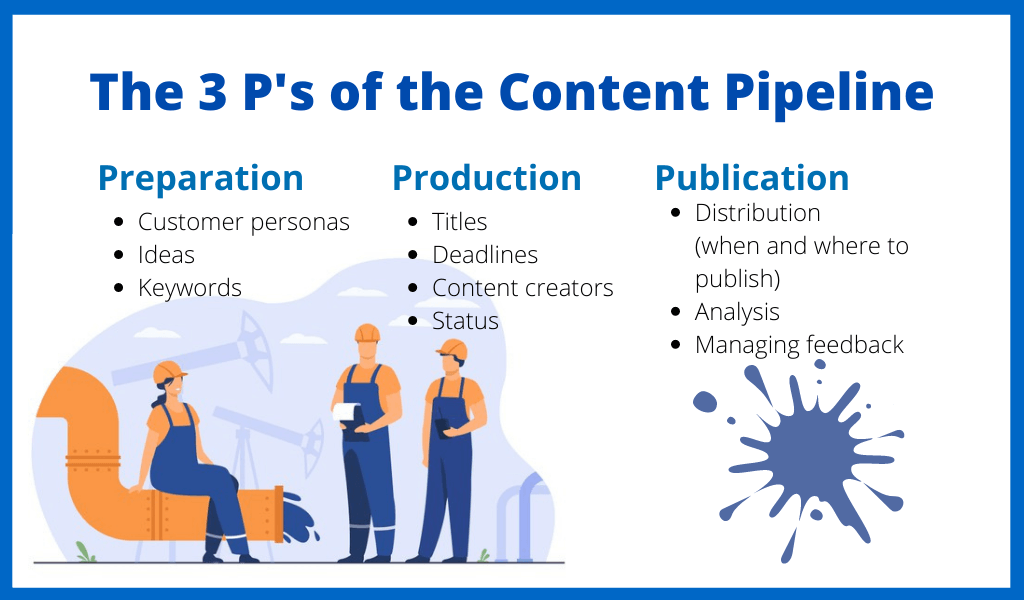
The Content Production Pipeline (Post-Content Planning)
Once the last details of content planning are concluded, it’s time for action. That’s where ideas turn into real assets.
If you have organized your production pipelines, work is faster because you know what comes next. Previous studies indicate that well-defined workflows can be more productive and reduce the risk of delays due to miscommunications or repeated rework.
- Moving Planning Into Execution: Taking assignments directly into production reduces delays and confusion. When ownership, timelines, and goals are defined early, teams move faster and collaborate more effectively.
- Accelerating Content Production Timelines: Content teams can create much more quickly when working within a structured approach to planning. Clear priorities and workflows cut down on wasted time and keep projects moving.
- Managing Revisions Within Timelines: Revisions should be planned, not reactive. When review stages are scheduled early, feedback becomes more focused and easier to implement without delaying publication.
- Implementing Pre-Publish Quality Checks: Readers can then point out errors, which in theory will be corrected the next time that part is posted. This iterative process of review can help reduce errors and increase trust over time.
Common Pitfalls and How to Avoid Them
Small marketing teams struggle with lack of time, conflicting priorities and ambiguous workflows. Research demonstrates that not having fully documented project plans and timely communication are some of the main contributors to projects failing to meet deadlines or delivering adequate results.
Understanding these pitfalls early on enables you to construct a content planning system that remains functional and viable:
- Avoiding Over-Planning Fatigue: Being thoughtful is also important, but spending too much time planning can slow things down and kill agility. Continue to make plans about decisions that facilitate execution.
- Clarifying Expected Deliverables: Unclear homework breeds confusion, along with mixed results. It ensures clear outputs with accountability and little to no rework.
- Balancing Content Production Velocity: Ignoring how quickly content can realistically be produced leads to burnout and missed deadlines. Planning should match available resources and capacity.
- Accounting for Revision Cycles Early: Edits are a part of production, not an addition. Incorporating them into timelines ensures that projects keep moving without last-minute rush.

Scaling This System as Your Team Grows
The higher the output, the more content planning has to evolve along with it to still get a good, consistent product. Teams that grow but don’t adapt process end up with coordination problems and erratic performance.
- Adding Strategic Planning Sessions: Monthly planning sessions help align long-term campaigns with weekly execution. This ensures short-term tasks support broader goals.
- Maintaining Cross-Channel Consistency: It becomes more difficult to be consistent as the output gets larger. Structured planning keeps messaging, tone and strategy consistent across platforms.
- Building Effective Delegation Frameworks: Clear delegation ensures work is distributed efficiently as teams expand. Defined roles improve accountability and reduce confusion.
- Supporting Growth with Automation Tools: Automation helps manage increased workload without overwhelming teams. When used correctly, it supports efficiency while keeping planning structured and manageable.
The 90-Minute Framework that Improves Content Operations
It's easier to plan and carry out content each week with the 90-minute framework. You do more work that helps you reach your real goals and spend less time reacting.
With StoryChief AI Operations, ideas, briefs, production, and distribution are integrated into one workflow. Start planning this week, and make the process better over time to make your content operation more efficient and scalable.