




Brands that post daily and still get no views, shares, likes, or leads know the feeling of disappointment. It is not that people are not online. They are just not stopping for your content specifically. That gap between traffic and engagement is where most marketing efforts die. That is why building the right digital engagement strategies is not optional.
But personalization alone is not going to save a strategy that is missing everything else. The brands with genuinely engaged audiences have several things working together.
In this article, we will explore 10 digital engagement strategies worth building into your approach this year.
What Makes Digital Engagement Strategies Work in 2026
Most brands fail not because they lack ideas. They fail because they push content when their audience comes for a conversation. Effective digital engagement strategies share three things. They are specific, they show up consistently, and they treat real people like real people.
1. Personalize Every Touchpoint, Not Just Email

Things like “Hi [First Name]” impressed people five years ago. That is a mail merged with a coat of paint, not real personalization. Actual personalization means a VP of Sales and an HR manager landing on your site and seeing genuinely different things, because they carry completely different problems into every single workday.
Salesforce figured this out early and committed fully. Their site shifts based on industry and job function. Nurture emails change based on what someone has clicked, not just how long they have sat in the CRM. It works because it respects something obvious: different people need different things at different moments in their journey.
What you can do:
- Segment your audience by role, industry, and buying stage
- Trigger content based on real behavior, not just time-based drip sequences
- Personalize landing pages by traffic source or returning visitor status
- Think of personalization as an operating philosophy rather than a subject line trick
2. Build Interactive Content Into Your Strategy

Reading is passive. Doing something is not. HubSpot's Website Grader has probably generated more qualified leads than a hundred blog posts combined. People get a score, want a better one, and stick around to figure out how. HubSpot also learns something genuinely useful about every person who runs through it, far more valuable than knowing someone clicked a headline on a Tuesday afternoon.
What you can do:
- Build quizzes, assessments, or calculators around real problems your audience faces daily
- Add polls to social posts and newsletters for fast and low-effort responses
- Experiment with interactive content and video using clickable chapters or embedded calls to action
- A LinkedIn poll takes twenty minutes and can drive more real conversation than an article you spent three full days writing
3. Build a Community Around Your Brand

People do not want to hear from brands. They want to hear from others navigating the same frustrations they face. The smart brand in 2026 does not try to be the loudest voice in the room. It builds the room and steps back.
Notion is the example everyone in community-led growth keeps referencing, and rightly so. They did not force participation. They created the right conditions, and enthusiastic users naturally shared templates, workflows, and creative setups. Those users became Notion's most credible advocates without anyone ever asking them to be.
What you can do:
- Start a Slack or Discord group around a topic your audience genuinely cares about
- Show up in your LinkedIn group as a facilitator, not a broadcaster
- Feature community members in content to give them real and deserved visibility
- Treat it like a genuine relationship instead of a distribution channel, and engagement follows naturally
4. Reward Learning and Participation
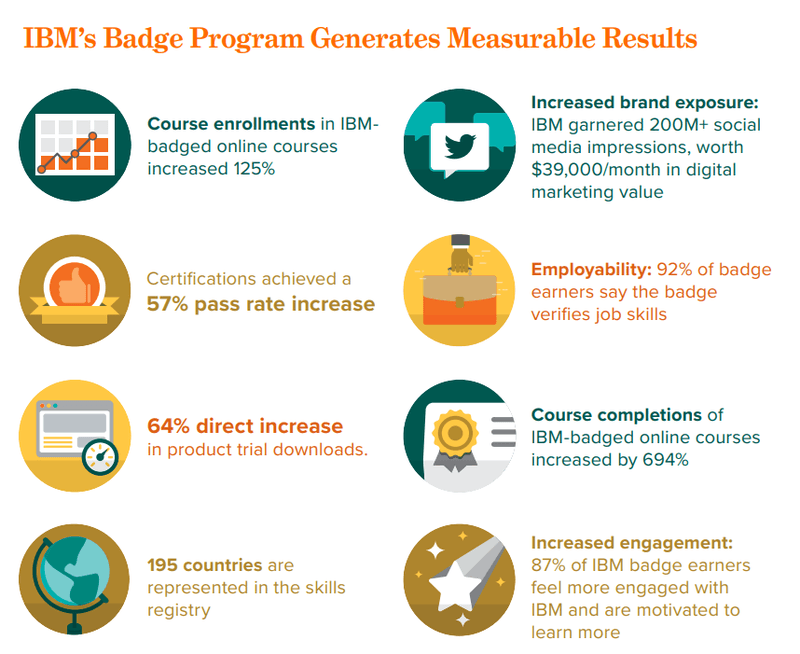
Someone sits through your 45-minute webinar, takes careful notes, and walks away genuinely better informed. Their reward is a follow-up email with the recording link. That is the entire return on their time and attention, and it is a missed opportunity every single time it happens.
A LinkedIn certification badge turns that moment into something worth having. Someone finishes your course or event, gets a badge they can display on their LinkedIn profile, and suddenly your brand is circulating through their entire professional network without you lifting a finger or spending another dollar. IBM does this through its IBM Skills Academy. People finish the training, earn a badge, add it to their profile, and IBM keeps showing up in feeds it never paid to reach long after the event ended.
What you can do:
- Issue digital badges after webinars, certifications, or training events of any kind
- Use a platform like Certifier to automate badge delivery and LinkedIn sharing
- Make the design genuinely polished so people are proud to display it publicly
- A recording sits in a folder. A badge circulates on LinkedIn for months
5. Use Short-Form Video to Drive Reach and Engagement
Stop waiting for perfect lighting or a polished script before you record. Gong built one of the most recognized B2B presences on LinkedIn without a studio or production team. Their videos are short, direct, and filmed like someone grabbed thirty seconds before their next meeting. That rawness is a part of why people trust them.
Native videos on LinkedIn also reach far more people than a YouTube link pasted into a post. The platform rewards content that keeps people on it rather than sending them elsewhere.
What you can do:
- Record short videos answering one specific question your audience asks regularly
- Post natively on LinkedIn for far greater organic reach rather than sharing YouTube links
- Repurpose existing blog posts into short video scripts to maximize the content you have already made
- One phone-filmed video per week outperforms a monthly polished production most of the time
6. Turn Employee Voices Into Content

Your company page has followers. Your employees have people who trust them. These are not the same thing, and treating them as interchangeable explains why many brand-led digital engagement strategies underperform.
Adobe understood this and used it well. They encouraged employees to share their own work and genuine insights under the broader Adobe umbrella. It reached audiences that the brand page could never access alone. Once the internal culture was in place, it cost almost nothing to maintain.
What you can do:
- Give employees pre-written posts they can personalize, keeping the barrier to sharing low
- Feature team members in your content so they have a natural reason to share it
- Recognize advocates consistently, because recognition sustains the behavior long-term
- Employee advocacy is one of the most underused B2B digital engagement strategies today, and starting costs nearly nothing
7. Engage Actively in the Comments Section
You publish something. Twelve people commented. You like two and respond to none. You have just signaled to the algorithm that your content is not worth amplifying, and told your audience you are not worth engaging with.
Drift built a real community because their team, executives included, showed up in comments on conversations that had nothing to do with their product. When people see a brand contributing value to discussions it never had to join, they pay close attention.
What you can do:
- Respond to every comment within the first hour of publishing
- Leave genuine and thoughtful comments on posts from people in your target audience
- Tag relevant people in your replies to bring them naturally into a conversation
- Comments are among LinkedIn's strongest algorithm signals. The engagement you put out genuinely comes back to you
8. Create Content That Solves One Specific Problem

The worst content brief: write something about X for our audience. It consistently produces content that is technically on topic and useful to almost nobody.
Canva does not write about design. They write about how to do a specific design thing in a specific amount of time for a specific purpose. "How to create a LinkedIn carousel in Canva in ten minutes." That is a piece someone bookmarks because they know they will need it again next Tuesday. Additionally, they can find it again because it has a title that matches what they searched for.
For more on building content around specific audience problems, read StoryChief's post on social media content pillars.
What you can do:
- Build content around the phrases your audience types into search engines
- Talk to your sales and support teams regularly; they hear the same questions every single week
- Answer one focused question per piece rather than trying to cover an entire topic at once
- Specific content ranks faster, earns more backlinks, and attracts readers who genuinely want it
9. Use Multi-Channel Distribution to Meet People Where They Are
Publishing once and calling it done means doing a fraction of the work, then wondering why results feel consistently thin.
Cisco runs content across YouTube, LinkedIn, and its own hub simultaneously. Each channel plays a different role. YouTube carries human stories. LinkedIn sparks professional conversation. The hub goes deep on expertise. All three reinforce the same core message. Someone in Cisco's audience encounters them multiple times a week across completely different surfaces, and that steady repetition is how trust genuinely forms over time.
What you can do:
- Repurpose every long-form piece into at least three additional formats before moving on
- Build a distribution checklist so nothing ever goes to just one single channel
- Use a unified publishing tool to manage multiple channels and save time each week
- Consistency rewards you more than quality alone. A solid piece everywhere weekly beats a brilliant piece published once.
10. Measure What Drives Engagement, Then Do More of It
Follower count is not a business metric. Impressions are not a business metric. Both feel reassuring on a slide deck, but tell you almost nothing about whether your digital engagement strategies are working.
HubSpot reviews content performance every single week. Not to celebrate wins, but to ask precisely why something worked and how to deliberately recreate it. They cut underperformers with equal speed and discipline. That ongoing habit of looking at honest numbers and genuinely changing direction because of them is a more durable advantage than any single piece of content they have ever published.
What you can do:
- Set up a weekly review covering your highest and lowest performing content
- Track engagement rate as your primary social metric, not raw reach or follower count
- Update your content calendar every month based on real data
- Most teams look at the numbers. Few change anything because of them. That gap is where real advantage lives
Start Building Real Digital Engagement
Posting more is not the answer. Most brands are already creating more than their audience has time for. What shifts engagement is narrowing down, choosing the digital engagement strategies that make sense for your specific audience and your capacity, and showing up consistently enough that people start to expect you.
Take two or three things from this list and build habits around them. Do that before you try to run all ten. The brands with genuinely engaged audiences got there by committing to a small number of things long enough for the results to compound. They didn’t do so by adding another strategy every quarter.
If you want to plan, create, distribute, and track all of it with one tool, StoryChief is the best pick. Start your free trial and find out what changes when your strategy and your execution finally live in the same platform.