



Marketing campaigns have evolved beyond the “one-channel at a time” approach. Today, a single campaign may involve blog posts, emails, social media, landing pages, newsletters, paid ads, video content, and interactive assets. This complexity makes managing campaigns manually inefficient and prone to errors.
As someone who has managed campaigns for SaaS products, B2B services, and consumer brands, I can tell you firsthand: the right campaign content creation tools don’t just save time. They transform the way your team collaborates, produces, and measures results.
The goal of this guide is to go beyond generic tool lists. I’ll share in-depth analysis, real-world examples, and practical workflows for each tool. You’ll learn how to integrate them into a modern campaign, optimize content across channels, and track performance for measurable impact.
What Makes a Campaign Content Creation Tool Great in 2026?
Before we look at specific tools, let’s set the bar for what good really looks like today. The most effective campaign content creation tools in 2026 share several traits:
- Integrated workflows: From ideation to publishing without switching apps.
- Team collaboration: Real‑time feedback, revision tracking, approvals, and roles.
- Automated distribution: Publish everywhere from one place — social, CMS, newsletters.
- Performance insights: Understand what content works and why.
- AI‑assisted support: Faster drafts, SEO suggestions, topic ideas, and more.
With those traits in mind, let’s unpack the 10 campaign content creation tools that consistently deliver maximum impact in real marketing campaigns.
Top Campaign Content Creation Tools in 2026
| Tool | Features | Pricing | Target audience |
|---|---|---|---|
| StoryChief | Multi-channel publishing, SEO, analytics, collaboration | $90–$400/month | Agencies, marketing teams |
| HubSpot Marketing Hub | Marketing automation, CRM integration | $50–$3,200/month | Large teams |
| Canva Pro | Visual content creation, templates, collaboration | $12.99–$30/month | Visual content creators |
| Monday.com | Workflow visualization, automation | $10–$30/user/month | Complex campaigns |
| Jasper AI | AI-assisted content creation | $29–$99/month | Rapid content generation |
| Trello | Kanban boards, task management, collaboration | Free–$20/user/month | Small teams |
| CoSchedule | Marketing calendar, social scheduling, analytics | $29–$80/month | Scheduling-focused teams |
| Buffer | Social media scheduling and analytics | $15–$99/month | Social media teams |
| SEMrush | SEO research, content optimization, analytics | $129–$449/month | SEO-driven content campaigns |
| Airtable | Customizable content databases, workflow automation | $10–$20/user/month | Multi-channel asset management |
1. StoryChief — The All‑In‑One Content Command Center
If there’s one platform that truly reflects the evolution of content marketing tooling in 2026, it’s StoryChief. Instead of separating planning, collaboration, SEO guidance, publishing, and analytics into different silos, StoryChief unifies them into a centralized workspace — something modern teams need when running multi‑channel campaigns.

I’ve used StoryChief across multiple product launches, newsletters, and editorial calendars, and its biggest impact has always been the reduction of friction. When our team works in StoryChief, we could:
- Brainstorm topic ideas with built‑in keyword research and AI prompts.
- Draft SEO‑friendly content with readability and structure suggestions.
- Share content with design and editorial teams for feedback right in the tool.
- Schedule and publish across blogs, social channels, and newsletters from one canvas.
- Track performance without exporting data to another dashboard.
This integrated flow eliminates the common “tool switching” slowdown that kills momentum in most content teams.
Why it works for campaign teams:
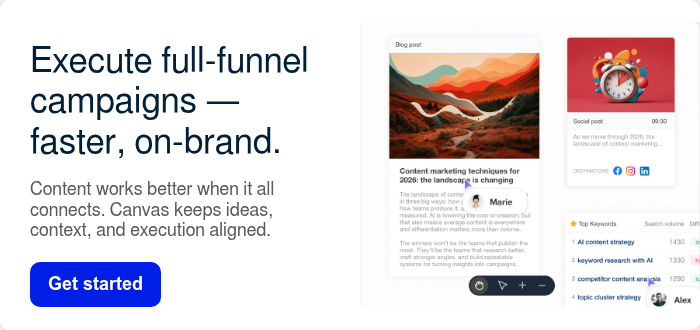
StoryChief’s AI‑powered campaign canvas lets you visualize your editorial plan, create multi‑touch funnels (blogs + social syndication + email), and measure performance in one place. It’s both structured enough for enterprise teams and intuitive enough for mid‑size squads to adopt quickly.
Best for: Multi‑channel strategy, editorial teams, agencies, and any marketer who wants one place to manage creation and publishing.
2. HubSpot Marketing Hub — Automation & Lead‑Driven Campaigns
Most teams start content creation with ideas — but the real campaign value comes when content drives leads and conversions. That’s where an automation platform like HubSpot Marketing Hub shines.
HubSpot blends content publishing with automation workflows, CRM data, advanced analytics, and calendar scheduling. While it’s not a pure creative tool, its ability to tie every content touchpoint back to revenue makes it a central piece in many B2B content strategies.

In one webinar promotion I managed, we used HubSpot to:
- Build landing pages with registration forms.
- Set up email sequences that nurtured warm leads automatically.
- Publish social posts tied to conversion tracking.
- Measure conversion rates across channels without manual reporting.
The result? We increased attendance and lead engagement without emailing every registrant manually.
Best for: Teams focused on lead funnels, nurture sequences, and revenue‑driven content.
3. Canva Pro — Visual Content Made Fast and Polished
Not every campaign needs visuals designed by a pro — but every high‑performance campaign does need consistently branded visual content. That’s where Canva Pro fits beautifully.

Canva’s intuitive editor, rich template library, and team sharing make it a staple in social and email campaigns. I still rely on it to create:
- Social carousels and Instagram Stories for product teases.
- Thumbnail graphics for blog posts and video channels.
- Presentations and decks for webinar campaigns.
Pair Canva with a scheduler (like StoryChief or HubSpot), and your visual pipeline stops being a bottleneck.
Best for: Rapid graphic production and consistent visual branding.
4. Monday.com — The Visual Workflow & Campaign Coordinator
Monday.com is a versatile workflow and project management platform that helps marketing teams visualize, organize, and track every aspect of a campaign. Instead of relying on spreadsheets or scattered messages, Monday.com brings tasks, deadlines, and content into one intuitive visual board.

I’ve used Monday.com to manage complex multi-channel campaigns, and what stands out is its clarity and adaptability. During a product launch, our team could:
- Map every task from blog drafts to social posts to design assets on Kanban and timeline views.
- Assign responsibilities and set automated reminders for approvals and deadlines.
- Attach files, comments, and notes directly to tasks to centralize feedback.
- Track progress across multiple campaigns with customizable dashboards.
This setup reduced last-minute scramble emails and ensured the campaign launched seamlessly across five channels.
Why it works for campaign teams:
Monday.com gives teams a visual, centralized workflow that aligns all contributors. By automating reminders and approvals, it keeps content moving without bottlenecks, which is crucial when multiple stakeholders are involved.
Best for: Cross-functional teams managing complex campaigns with many steps and contributors.
5. Jasper AI — AI-Powered Content Generation
Jasper AI is an artificial intelligence writing assistant designed to help teams generate drafts for blogs, social media, emails, and more. While it doesn’t replace human creativity, it speeds up ideation and initial content creation, which is a huge advantage for high-volume campaigns.

I’ve relied on Jasper AI during tight deadlines and multi-post campaigns, and it’s impressive how much time it saves. With Jasper, I could:
- Generate blog outlines, social captions, and email drafts in minutes.
- Receive AI prompts that helped overcome writer’s block and spark new ideas.
- Integrate keywords naturally for SEO-driven campaigns.
- Repurpose existing content across formats without starting from scratch.
The real benefit is shaving hours off content creation while keeping drafts high-quality and aligned with brand voice.
Why it works for campaign teams:
Jasper AI accelerates content production and helps maintain consistency across channels. It’s particularly useful for campaigns that require frequent posting or rapid response content.
Best for: Teams that need fast, draft-ready content for blogs, social media, and emails.
6. Trello — Simple, Visual Task Management
Trello is a Kanban-based task management tool that helps teams organize campaigns with a simple, intuitive visual interface. Each card represents a piece of content, and teams move it across columns such as “Ideation,” “Drafting,” and “Scheduled” to track progress.

In campaigns I’ve managed, Trello’s simplicity has been a lifesaver:
- All posts, graphics, and drafts were tracked on a single board visible to the team.
- Checklists and due dates ensured no step or deadline was missed.
- Comments and attachments centralized feedback from writers, editors, and designers.
- Integrations with tools like Google Drive and Slack reduced tool switching.
This approach makes the content workflow transparent and eliminates the chaos that often comes with multi-person campaigns.
Why it works for campaign teams:
Trello’s visual simplicity keeps small to mid-sized teams aligned without the overhead of complex systems. It’s ideal when you want clarity over bells and whistles.
Best for: Small teams or campaigns with straightforward content pipelines.
7. CoSchedule — Unified Marketing Calendar
CoSchedule is a marketing calendar and content orchestration tool designed to connect blog posts, social media, and email campaigns in one visual schedule. It removes the guesswork around timing and ensures content flows strategically across channels.

I’ve used CoSchedule to plan quarterly campaigns, and its biggest impact was aligning content across the team:
- Every blog post, social update, and newsletter had a visible place on the calendar.
- Tasks could be assigned to writers, editors, and designers with due dates.
- Analytics helped optimize posting times and measure engagement.
- The drag-and-drop interface made adjusting schedules easy without confusion.
With CoSchedule, gaps in campaigns become visible early, so no content gets lost in the shuffle.
Why it works for campaign teams:
CoSchedule ensures content cadence remains consistent and visible across teams, which is critical for multi-channel campaigns with tight schedules.
Best for: Teams that prioritize scheduling, planning, and coordination over deep automation.
8. Buffer — Social Media Scheduling & Analytics
Buffer is a social media management tool for scheduling, publishing, and analyzing posts across multiple platforms. While it’s not a full content creation platform, Buffer excels at ensuring social campaigns are consistent, timely, and optimized for engagement.

In one social campaign I ran, Buffer made posting across five channels effortless:
- Posts were scheduled weeks in advance for consistency.
- Analytics showed which content performed best, helping refine copy and visuals in real-time.
- Team members could approve posts and leave comments directly in the tool.
- Engagement reporting allowed quick course correction mid-campaign.
Buffer helped us maintain a high level of activity without overloading the team or missing prime posting times.
Why it works for campaign teams:
Buffer simplifies social media management and provides actionable insights. Teams can maintain consistent presence without manual posting or guesswork.
Best for: Social-first campaigns and teams managing multiple social accounts.
9. SEMrush — SEO-Focused Content Strategy
SEMrush is an SEO and content marketing tool that guides campaigns using data-driven insights. Beyond keyword research, it helps teams plan, optimize, and measure content impact for maximum organic reach.

I’ve used SEMrush to guide multiple SaaS campaigns, and it provided:
- Keyword and topic research to identify high-opportunity areas.
- Competitor content analysis to understand what works in the market.
- SEO recommendations to optimize blog posts and landing pages.
- Analytics dashboards tracking traffic, engagement, and ranking improvements.
SEMrush helps teams plan smarter campaigns with data, rather than just produce content. By understanding audience behavior, competitor strategies, and trending topics, marketing teams can make informed decisions and focus their creative efforts where they’ll have the most impact.
Best for: Teams that want strategic guidance, performance tracking, and competitive intelligence to inform campaigns — especially for SEO-driven and high-traffic growth initiatives.
10. Airtable — Flexible Content & Campaign Hub
Airtable is a database-driven platform that combines spreadsheet functionality with project management, making it perfect for complex campaigns requiring multi-channel coordination.

I’ve used Airtable to manage six-month campaigns with dozens of assets and contributors:
- Tables tracked blogs, social posts, emails, and paid campaigns in one place.
- Calendar, Kanban, and gallery views helped visualize timelines and content stages.
- Team members added notes, attachments, and approvals directly to the records.
- Automations reminded stakeholders about deadlines and content handoffs.
The result was a centralized hub where content assets, timelines, and workflows were transparent, reducing confusion and duplication.
Why it works for campaign teams:
Airtable provides ultimate flexibility for managing complex campaigns, especially when content spans multiple formats and channels.
Best for: Teams that need a custom, centralized system to manage campaigns, assets, and timelines simultaneously.
How These Campaign Content Creation Tools Fit a Modern Workflow
Here’s how smart teams typically blend content creation tools for a campaign:
- Planning & strategy: Outline themes and schedules in a shared calendar (StoryChief, CoSchedule, or Airtable).
- Generation: Draft drafts and frameworks using AI (StoryChief, Jasper) or internal writing.
- Design: Design visuals in Canva.
- Coordination: Track progress and approvals in StoryChief, Monday.com or Trello.
- Distribution: Distribute content from StoryChief or Buffer.
- Optimization: Drive organic strategy with StoryChief or SEMrush insights.
- Measurement: Analyze performance across channels and refine.
This blended approach keeps content aligned, reduces manual work, and ensures every piece contributes to measurable campaign goals.

Conclusion: Build Campaigns That Scale
The bar for campaign content creation tools keeps rising — and in 2026, the winners are platforms that bring strategy, creativity, and execution together.
Whether you choose a centralized hub like StoryChief, an automation powerhouse like HubSpot, or a mix of scheduling and collaboration tools, the right stack will turn your content into coordinated campaigns that work harder and smarter.
Choose tools that reduce repetitive work, improve collaboration, align your team, and give clarity into what truly moves your audience — because in 2026, that’s how great campaigns are built and scaled.