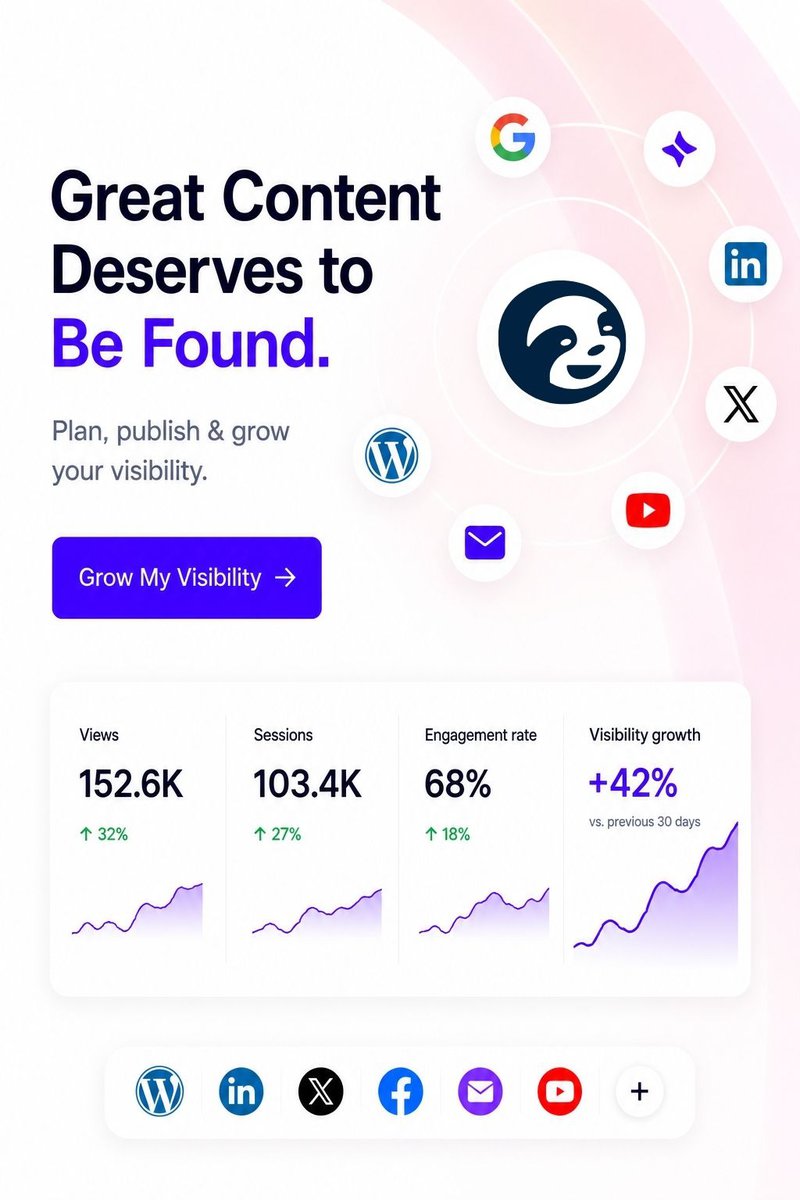





AI tools can generate content in seconds.
But can they maintain a consistent brand voice across your content? That’s the real question.
According to HubSpot’s 2025 State of AI report, 55% of marketers use AI for content creation. As AI becomes part of everyday content production, keeping every AI-generated asset on-brand gets harder. And so does avoiding AI slop.
This is where brand voice AI tools can help. You can use them to protect your brand voice as you scale content production.
Let’s take a closer look at what brand voice AI tools are, how to use them, and six platforms your marketing team can start using to scale content production without losing your brand voice. 👇
Quick Comparison: Best Brand Voice AI Tools
| Tool | Best For | Standout Feature | Primary content type |
|---|---|---|---|
| StoryChief | B2B content marketing agencies scaling content production | Built-in brand voice management + collaboration + publishing in one place | Blogs + multi-channel marketing content |
| Jasper | Enterprise marketing teams with large-scale content operations | Off-brand detection | Enterprise marketing content |
| Storydoc | Marketing teams that create on-brand presentations and business documents | AI-powered interactive business documents | Presentations + business documents |
| Planable | SMMAs managing multiple brands | Brand context | Social media |
| Anyword | Performance marketing teams | Predictive copy performance scoring | Performance/advertising copy |
| Envato’s AI Voice generator | Marketing teams that create branded AI voiceovers | Multiple voices, accents, and speaking styles | Voiceovers |
What are Brand Voice AI tools?
Brand voice AI tools are software marketing teams use to create and maintain a consistent brand voice across their content.
Depending on the platform, they can analyze your existing content, brand guidelines, and style guide to build a reusable AI brand voice profile that reflects your brand tone and personality in everything you create.
This is especially useful when you’re scaling content across channels or managing niche product lines.
For example, a retailer specializing in tuxedo suits can use AI to keep product descriptions, email campaigns, social media posts, and ad copy aligned with the same premium brand voice, so every campaign feels cohesive and recognizable.
Likewise, a B2B SaaS company can use brand voice AI tools to keep content consistent across product pages, blogs, case studies, emails, and sales materials.
Top brand voice AI tools combine AI content creation, brand voice management, collaboration, and human review to help teams produce more content while maintaining a consistent brand voice.
Here’s how to use them. 👇
How to use brand voice AI tools
Set up your brand voice AI tool in five steps:
- Feed AI your best existing content: Upload your best content samples so the AI can learn your brand voice, tone, style, word choices, and messaging patterns.
- Give AI your brand guidelines: Add your brand guidelines so the AI understands your tone, terminology, messaging, and style rules.
- Generate content across every channel: Use the AI tool to create on-brand content for blogs, emails, LinkedIn posts, and other media.
- Review every output before publishing: Refine anything that feels generic or off-brand before you hit publish.
- Keep refining your brand voice: Add new content samples and update your brand voice guide inside your AI as your tone evolves.
Let’s take a look at which brand AI voice tools can help you scale content creation without diluting your brand voice. 👇
To compare these tools, focus on how well each one fits your team's primary content workflow, supports reusable brand guidelines, and reduces manual brand-review work. The best option isn't necessarily the tool with the most AI features. It's the one your team can integrate into its existing content process without creating another disconnected workflow.

6 Best Brand Voice AI Tools for Marketing Teams
Here are six brand voice AI tools worth considering based on the marketing workflow each one supports best:
1. StoryChief: Best for B2B content marketing agencies scaling content production
StoryChief lets teams create a reusable brand voice instead of repeating the same instructions every time they generate content.

Once you set up a brand voice using high-quality content samples, StoryChief can apply it across blogs, newsletters, LinkedIn posts, emails, and social content.
You can also create separate brand voices for different brands, products, or campaigns, refine them over time, and share them with your content team through StoryChief’s collaboration features.
Unlike standalone AI writing tools, it combines brand voice management, collaboration, and publishing in one platform, helping your team keep content on-brand from creation to publication.

Key Features
- Built-in brand voice management + collaboration + publishing all in one platform
- Creates brand voices from URLs, writing samples, or existing content
- Customizable brand voice profiles
- On-brand AI content generation
- Multiple brand voices
Pros
- All-in-one content marketing platform
- Cross-channel brand consistency
- Easy brand voice setup
- Multiple brand voices
- Free plan available
Cons
- More features than you need for simple AI writing
- AI content still needs human review
2. Jasper: Best for enterprise marketing teams with large-scale content operations
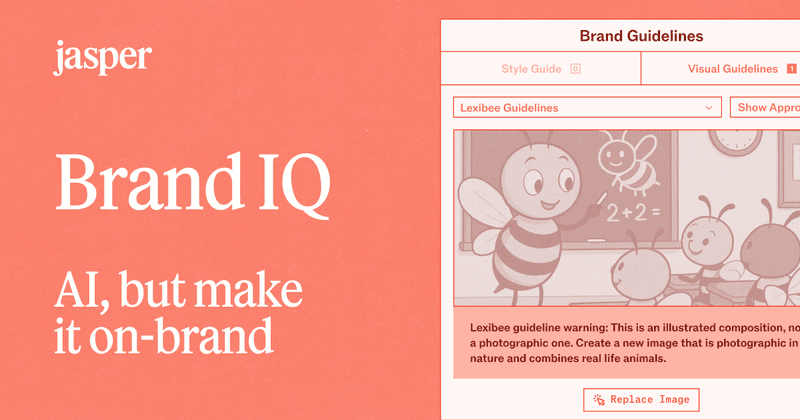
Jasper is a good fit for enterprise teams with robust content operations that want to maintain a recognizable brand voice.
Its Brand IQ feature brings your brand voice, style guide, and visual guidelines together, then applies them as you create content for blogs, emails, LinkedIn, and campaigns. For larger teams managing multiple AI-assisted workflows, this kind of centralized governance can function as a governance control plane, giving organizations a consistent layer for enforcing brand rules, permissions, and content policies.
My favorite part is how quickly Jasper flags off-brand content and suggests revisions before anything goes live. This can reduce review rounds and help your team move faster.
Key Features
- Generate brand voice from your content
- Strong brand governance features
- Default workspace brand voice
- Off-brand content detection
- Brand IQ
Pros
- Multiple brand governance tools in one place
- Workspace-wide brand consistency
- Fewer manual review cycles
- Easy brand voice setup
Cons
- Advanced features require higher-tier plans
- The pro plan supports only two brand voices
3. Storydoc: Best for marketing teams creating branded presentations and business documents
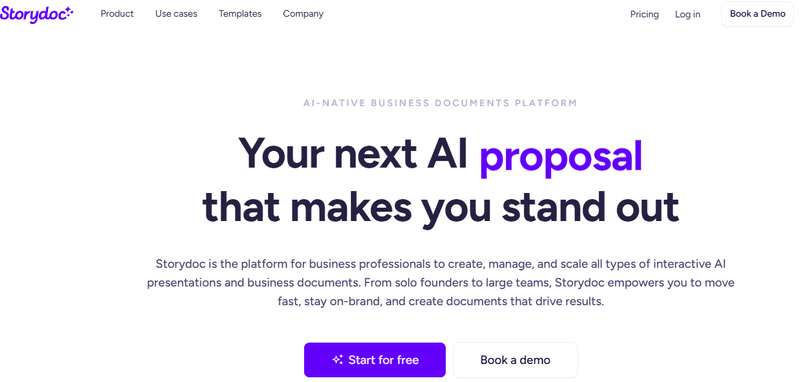
Storydoc isn’t a platform I use for typical content creation
I use it to generate interactive business collateral, such as proposals, or presentations that I share with my clients.
I set up my brand and give Storydoc business context, and it uses that information to keep AI-generated documents aligned with my brand.
Even better, I can embed interactive elements like videos, forms, Calendly, and eSigning tools to make each document more engaging and effective.
Key Features
- Dynamic variables for personalized documents
- Brand voice and visual style adaptation
- AI writing and design assistants
- Integrations with HubSpot, Gong, Fathom
- Engagement analytics and alerts
- Team collaboration and organization governance
Pros
- Creates personalized business documents with dynamic variables or directly from HubSpot
- Automatically adopts your logo, brand voice and visual style
- Combines AI writing and design in one platform
- Supports collaboration on branded documents
Cons
- Built for business documents rather than typical marketing content
- AI-generated content still needs human review
4. Planable: Best for SMMAs managing multiple brands
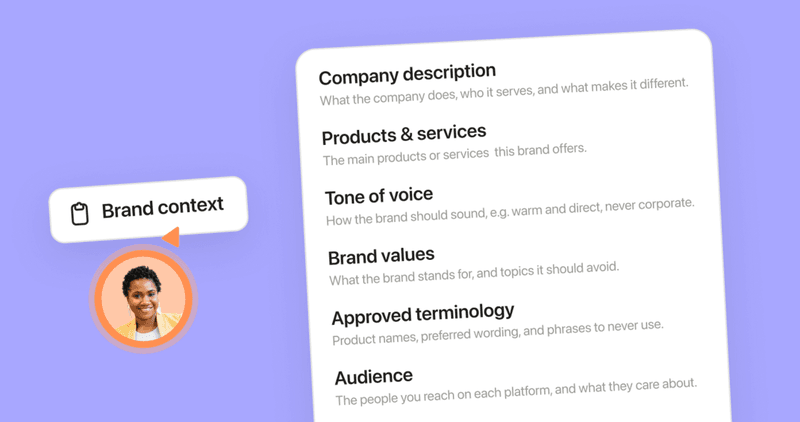
Beyond being a top social media management platform, Planable uses Brand Context to keep your AI-generated content aligned with your brand voice.
With Brand Context, you can define your brand voice, values, approved terminology, audience, and company details once. Then Planable uses them whenever you create or rewrite content.
I also like that each workspace has its own Brand context. If you’re managing multiple brands or clients, you can build a separate profile for each, and Planable automatically applies the right voice to each brand’s drafts.
Key Features
- Collaboration, approvals, scheduling, and content planning
- Custom tone of voice, brand values, and audience settings
- Separate Brand Context for different workspaces
- Approved terminology and naming conventions
- AI-generated posts and post rewriting
Pros
- Combines AI writing with collaboration, approvals, and scheduling
- Automatically applies your brand context to AI-generated content
- Reduces repetitive prompting when writing or rewriting posts
- Supports multiple brands with separate workspaces
Cons
- Brand Context only works with Planable AI writing features
- Built primarily for social media workflows
5. Anyword: Best for performance marketing teams

You don’t have to choose between protecting your brand voice and improving performance. Anyword helps you do both.
Performance marketers can use Anyword to create content that matches their brand voice and performs better.
Its brand voice feature helps you create content that matches your brand, while its predictive performance scoring feature estimates how well your content can perform before you publish.
This combo helps you optimize blogs, emails, landing pages, ads, and social posts for both brand voice consistency and conversions.
Key Features
- Predictive performance scoring
- Custom tone of voice formulas
- Brand rules and vocabulary
- Reusable AI brand voice
- Messaging bank
Pros
- Performance-driven content optimization
- Strong brand consistency capabilities
- Built-in messaging guidelines
- Easy AI brand voice training
Cons
- More suited to performance marketing than editorial workflows
- Advanced features require higher plans
6. Envato’s AI Voice generator: Best for marketing teams creating branded AI voiceovers

Envato’s AI Voice generator’s interface for creating AI-generated voiceovers with customizable voices and speed controls.
Envato’s AI Voice generator takes brand voice in a more literal direction.
Brand voice AI tools usually focus on written content. But your brand voice shouldn’t disappear the moment you switch to video.
When you create YouTube videos, product demos, explainer videos, or online courses, you want your narration to reflect the same brand voice as your written content.
This is where Envato’s AI Voice generator shines.
You can turn your scripts into realistic voiceovers in minutes, choose from different AI voices, adjust the speed, and regenerate narration whenever your script changes.
Use the same voice and delivery settings across projects to keep narration consistent and make revisions faster than traditional recording.
Key Features
- Multiple voices, accents, and speaking styles
- Commercial licensing for business use
- AI text-to-speech voice generation
- Natural-sounding AI voices
Pros
- Maintains consistent narration across content series
- Reduces traditional voiceover production costs
- Generates realistic voiceovers in minutes
- Makes script revisions and iterations fast
Cons
- Complex emotional performances may still benefit from human voice actors
- Results depend on the quality of your scripts
Wrap up on brand voice AI tools
The right brand voice AI tool helps your team scale AI-generated content without sacrificing your brand voice.
Remember to:
- Give the AI your best content samples.
- Prepare clear brand voice guidelines.
- Review and refine AI-generated content before publishing.
- Update your AI brand voice profile as your brand voice evolves.
If your team needs to manage brand voice alongside content creation, collaboration, and publishing, StoryChief brings those workflows into one platform. Explore whether it fits your team's content process or book a demo to see how it works.

FAQs About Brand Voice AI Tools
What are the benefits of using brand voice AI tools?
Brand voice AI tools help marketing teams:
- Maintain a consistent brand voice across channels.
- Scale content without diluting brand identity.
- Keep multiple writers and teams on-brand.
- Adapt content for different channels.
What’s the best AI tool for maintaining a consistent brand voice?
The right AI tool for maintaining a consistent brand voice depends on your current team’s needs.
For example, you might choose: StoryChief for all-in-one content marketing, Jasper for enterprise content operations, Storydoc for branded business documents, Planable for social media management, Anyword for performance marketing, and Envato’s AI Voice generator for AI-generated voiceovers.
Can AI actually learn my brand voice?
Yes. AI tools can analyze examples of your writing and use those patterns to recreate your brand voice in new content.
Most brand voice AI tools learn from your content samples and brand guidelines to create a reusable brand voice profile.
The better your examples, the more closely AI matches your tone, style, and messaging.
Note: Always review the output before publishing to ensure it reflects your brand. No AI is perfect. Human review and editing are still very important.
How do I choose the right brand voice AI tool?
To choose the right brand voice AI tool, start with your team’s primary workflow.
Whether you create blog posts, social content, business documents, ad copy, or AI voiceovers, choose a tool built for that workflow.
The best one for you fits naturally into your current content operations.