


From HR to project management to marketing, automated tools are no longer optional for large businesses — they’re essential if you want to compete with industry leaders. Marketing automation alone can increase your company’s revenue by 10%, and that can happen in just 6–9 months. With 76% of enterprises investing in marketing automation tools in 2026, we’ve created a five-step playbook to help you scale campaigns smoothly and keep up with growing industry demands and expectations.
The Benefits of Enterprise Marketing Automation
Enterprise marketing automation tools are being used by large-scale businesses to scale campaigns, personalize customer targeting, and improve company performance across global markets.
Using automated tools to build a central project system, segment customers, and manage multi-channel campaigns can improve your team’s marketing without wasting time or extra resources.
Some of the many benefits of marketing automation for large-scale teams include:
Optimized Resource Allocation
Automated systems can lead to a 12.2% reduction in marketing overhead. By using centralized, automated tools to power marketing campaigns, enterprise teams spend less time planning and auditing and more time executing carefully crafted strategies. With repetitive tasks taken care of, the headcount needed to create and deliver powerful content drops, and teams become final cut editors, rather than campaign-wide workhorses.
Centralized Operations
Enterprise marketing automation tools such as StoryChief, Asana and Monday help teams create a centralized workspace that groups campaign planning, approvals, timelines, and stakeholder collaboration all in one place. This eliminates data silos and keeps the marketing campaign moving, allowing all team members to edit, collaborate, and access one source of truth.
Smart Lead Generation
Did you know that 80% of businesses state that marketing automation significantly increases lead generation? With most automation tools driven by AI, enterprise teams using them to their advantage improve personalized targeting and automate the creation of lifecycle-stage-specific content tailored to millions of individual profiles. In fact, tools like Salesforce automatically capture, score, and nurture leads to ensure that the most qualified prospects reach key sales pipelines.
Effortless Scalability
Enterprise-level companies are always growing. When it comes to your marketing department, investing in automation is the key to multiplying your reach on demand without operational growing pains or sacrificing the quality of the customer experience.
How to Use Marketing Automation to Scale Campaigns Across Teams: A 5-Step Playbook
If you want to scale your next marketing campaign effectively, investing in automated tools and platforms is a no-brainer for a growing enterprise.
From centralizing campaign planning to deploying AI agents to scale operations, here’s a five-step playbook on using automation tools during all stages of the marketing process.
Start By Centralizing Your Operations
Without a clear workflow in place, campaign execution becomes disjointed across platforms, poorly targeted, and terribly timed.
Data silos, lagging approvals, and a lack of team-wide communication are key factors in a messy campaign.
Automated workflow platforms like StoryChief, Asana and Monday provide large teams with a centralized framework for planning, collaborating, streamlining approvals, and setting timelines ahead of campaign execution.
Start by auditing your current campaign planning and approval processes across departments.
Once you’ve established where your planning process pitfalls are, it’s time to automate key aspects of your strategy.
StoryChief allows your team to define approval workflows and automate task assignments based on campaign stage.

Taking this one step further, automated campaign platforms like Asana and Trello also allow you to create standardized campaign templates for recurring initiatives that drain time and resources.
Unify Your Customer Data
In order to personalize your campaign effectively, your team must have a complete view of the customer. In an enterprise-level company, there is no room for fragmented customer data. These lead to inconsistent experiences for the consumer and declining lead-generation as a result.
Automating customer data collection and storage is the next natural step. If you already have a large customer base, investing in a tool like StoryChief could help your team actually use data to tailor upcoming campaigns, rather than simply storing customer profiles in a basic CRM.
Salesforce, for example, enables enterprises to consolidate customer data, create advanced audience segments, and activate personalized campaigns across channels.
These advanced segments are not only created automatically, but are also refreshed in real-time based on changing customer behavior.
The outcome? Your team can rely on real-time audience segmentation, instead of pouring focus into reactive personalized messaging that naturally drives conversions.
Automate a Multi-Channel Campaign
The best marketing campaigns cover multiple touchpoints. For enterprise-level teams, you should be aiming to interact with multiple channels for the best results.
However, with a number of channels to cover ranging from email to socials to site content, manual coordination could be the reason why your customers are receiving inconsistent messages across platforms.
Using tools like HubSpot, your team can orchestrate email, website, social media, lead nurturing, and sales handoffs from a single platform.
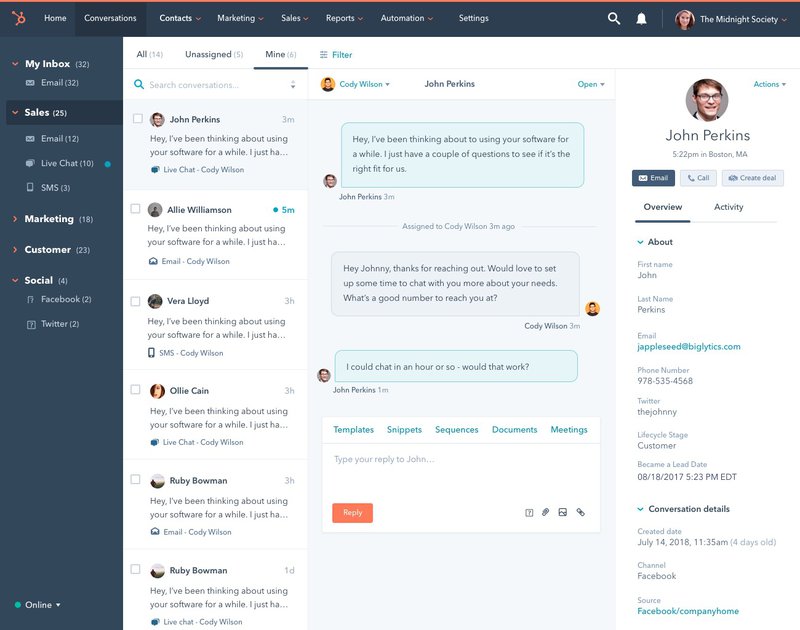
StoryChief also allows real-time collaboration between team members, so you can all work and contribute to a piece.

With the ability to build automated workflows, your team can use automated workflow tools like HubSpot to ensure that every channel receives tailored, personalized messaging that still remains consistent across all touchpoints.
Better still, with a dashboard at hand, your team can monitor workflow performance, optimize customer journeys, and even route qualified leads to different channels seamlessly.
Deploy AI Agents To Manage Campaign Volume
As your campaign scales, operational bottlenecks become one of the biggest barriers to growth. Instead of expanding headcount to manage increasing campaign volume, enterprise teams are turning to AI agents to automate complex, multi-step workflows at scale.
OpenClaw, for example, enables enterprises to deploy AI agents that can perform multi-step workflows across business applications. Rather than automating a single task, OpenClaw agents can execute entire processes, interact with multiple systems, retrieve information, make decisions based on predefined rules, and complete actions autonomously.
In practice, this covers high-volume tasks like campaign reporting, customer behavior tracking, content scheduling, and performance monitoring, all running without manual input and freeing your team to focus on strategy and creative direction.
Automate Your Campaign Analytics
All successful campaigns are constantly analyzed to drive ongoing optimization. As customer behavior shifts and new trends arise, an enterprise-level team is expected to adapt first, leading a new narrative alongside industry giants.
However, manually analyzing campaign metrics is a sure-fire way to miss the mark.
Investing in an automated analytics platform such as Google Analytics 4 (GA4) or a specific metric tracker such as Mention could help you turn your campaign analytics into a data-driven feedback loop.
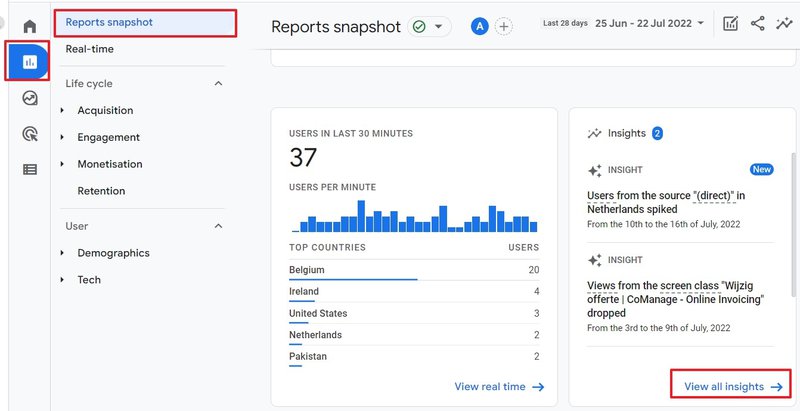
(Image Source: Google Analytics)
GA4, for example, allows you to set up alerts for performance anomalies, conversion drops, or engagement changes so that your team can react proactively.
These insights then feed back into segmentation, personalization, and campaign orchestration workflows for future campaign optimization.
This is the key to not only responding to changing trends ahead of the curve, but constant metric tracking supports long-term growth and returns on investment almost immediately.
What’s Next for Enterprise Marketing Automation Tools?
Enterprise marketing automation tools are getting smarter. We’re moving away from rule-based systems to AI agents that understand objectives, can make complicated decisions, and will adapt to achieve their goals.
The next era of enterprise-level automation will shift from task automation to end-to-end orchestration.
95% of enterprise marketing teams use at least one dedicated marketing automation platform, with 41% having mostly or fully automated their customer journeys.
Those who refuse to invest in automation could find themselves behind in a fast-moving marketing sector.

