



AI is not a buzzword in marketing anymore—it’s an everyday strategy. In fact, the world of marketing is evolving fast. In 2025, 88% of marketers used AI from content creation to campaign optimization, and more businesses are expected to rely on AI more in 2026.
Today, marketing campaigns must be agile in real time to meet customer expectations. Thanks to AI marketing services, you can stay ahead of the competition by using smart tools and specialized services.
In 2026, AI marketing goes beyond tools and focuses on strategic services provided by professionals using data to get real results. This guide covers the most valuable AI marketing services, how they work, and how to choose one for your brand.

How AI Marketing Services Actually Work
AI marketing services are not just about employing fancy software. When you really get right down to it, everything comes back to these three foundational principles:
Data Is the Fuel
AI runs on data. This includes everything from your web traffic and email opens to ad clicks and social engagement. Brands can harness first-party data, such as purchase history or CRM contacts, to target more effectively and personalize at scale.
78% of high-performing marketers are already using AI to analyze real-time data. Without clean data, even the most advanced AI tools can flounder.
It’s AI, but Humans Still Lead
AI can assist with rapid changes and predictions, but it doesn’t substitute for people. They can suggest subject lines, test visuals, or write drafts—but marketers still oversee the tone, messaging, and morals.
There are two primary types of AI at work:
- Predictive AI: Predicts what users might do next
- Generative AI: Produces something, like a picture or a written piece
Why Services, Not Just Tools
Tools are useful, but they take time, testing, and experience. This is why businesses are opting for AI marketing services instead of tools. Today, 67% of companies already outsource at least some of their AI marketing to agencies or platforms with embedded assistance. It’s not just a matter of access—it’s also about results.
Core Types of AI Marketing Services in 2026

1. AI Content Creation and Strategy Services
Content still powers a majority of digital marketing work. Blogs, landing pages, ads, emails, and social posts all rely on killer content. The planning, creation, and improvement of content have transformed.
Here are three significant areas in which AI-based content services make an impact:
AI Writing Assistants
AI writing services facilitate generating ideas, outlines, drafts, and variations. Marketers use them to produce recipes faster, not to stifle creativity.
These tools assist with:
| AI Writing Assistants | Primary Function | Common Use Cases |
|---|---|---|
| StoryChief | AI Content Strategy, research, creation, optimization | Blog posts, social media campaigns, brand voice |
| Jasper | AI content generation | Blog posts, ad copy, email marketing content |
| Copy.ai | Short-form copywriting | Social captions, taglines, product descriptions |
| ChatGPT | Conversational writing + Q&A | Website copy, FAQs, outlines, long-form support |
AI Content Optimization Services
Writing doesn’t stop there. AI optimization services help with structure, clarity, and relevance once a draft is in place. They point out what’s lacking and how to make something more well-ranking.
| AI Content Optimisation Services | Primary Function | Common Use Cases |
|---|---|---|
| StoryChief | SEO scoring, automated content audit | Keyword reporting, content audit with improvement opportunities, SEO scoring |
| Clearscope | Content quality scoring | Improve readability, keyword coverage, SEO grading |
| MarketMuse | Topic modelling + strategy | Content briefs, gap analysis, SERP alignment |
| Surfer SEO | Real-time SEO optimisation | Keyword density, structure suggestions, competitor scan |
AI Visual Content Generation
Visuals matter more than ever. AI design tools simplify the process of generating images, graphics, and layouts without having to turn to a designer every time.
These services help your team produce:
| AI Visual Content Generation | Primary Function | Common Use Cases |
|---|---|---|
| Midjourney | AI art + image generation | Social graphics, conceptual illustrations |
| DALL-E | AI visual design from prompts | Product mockups, landing page images, creative assets |
| Canva AI | Smart design + templates | Infographics, social visuals, branded slides |
| StoryChief | Image and video generation | Reels, Shorts, Animations |
Importantly, StoryChief combines AI writing, a visual content tool, and SEO advice all in one dashboard. It’s a wonderful example of how contemporary AI services are combining and blending functionality to facilitate end-to-end content workflows for teams large and small.

2. AI Social Media Management Services
Social media demands constant attention. Your brand must often post, respond promptly, and maintain relevance across multiple platforms. AI social media services can help you with this workload without compromising the quality. They assist with:

Automated Scheduling & Posting
Scheduling social posts in advance is now a given part of any social strategy. But AI tools take it a step further.
AI scheduling tools like StoryChief AI, Buffer AI and Hootsuite Insights do more than just schedule it. They’ll suggest optimal post times based on when your audience is most engaged. They’ll also learn from your previous posts to fine-tune your future calendar.
Companies like StoryChief go even further, providing multi-channel distribution plus AI that optimizes headlines, summaries, hashtags and complete campaigns for each platform.
AI Captioning, Hashtags, and Copy
When you write social copy, it’s not what you say—it’s how you say it. AI is now able to draft captions that speak the language of each platform. They'll also show trending hashtags that can increase your reach based on your post's content and audience.
What AI can generate includes:
- Instagram captions with call-to-actions
- Twitter threads from blog summaries
- Hashtag sets based on topic, trend, or niche

Sentiment Analysis and Social Listening
Posting isn’t enough—you also have to listen. AI-powered social listening tools can work for you. In fact, they can smell the first signs of a PR crisis already.
Key benefits include:
- Real-time brand health monitoring
- Instant notification of spikes in negative or positive sentiment
- Industry or market competitive assessment
Content Performance Prediction
Before you press “post,” AI can predict how successful your content will be. The tools analyze formats and engagement histories of similar posts to recommend alterations to maximize reach. This gives you an early warning if a post is likely to underperform or go viral.
Capabilities include:
- Headline or caption scoring
- Format recommendations (carousel, image, reel, etc.)
- Time-of-day performance predictions

3. AI Advertising and Paid Media Optimization
60% of marketers who have deployed AI in paid campaigns said the technology led to a return on ad spend (ROAS) increase within three months. This is because AI isn’t only automating tasks—it is learning, predicting, and optimizing constantly to maximize results in a real-time capacity.
Here’s a closer look at the underlying services that brands are leveraging:
Ad Creative Generation
AI platforms can now quickly make images, headlines, and versions. This not only speeds things up, but it also broadens the range of testing and learning. Ad tools like AdCreative.ai can handle all business cases—from social media ads to Google Display banners—without requiring a design team at the ready.
Automated Bid Management
For what it’s worth, these AI bids don’t leave things to chance. Your ad spend is being auto-optimized based on who’s seeing and interacting with your ads, at which time of day, and how likely they are to convert.
Google’s Smart Bidding system, for instance, leverages machine learning to move budgets from poorly performing audiences to better ones as campaigns are running. This makes it easier for you to reduce your cost-per-click (CPC) and extend your budget across platforms.
Audience Targeting Optimization
Not only what you say, but also whom you direct your message at makes a big difference. Rather than having to do the heavy lifting, AI services are based on grouping users according to interests, intent, or behavior. This feature is particularly useful for creating high-converting lookalike audiences or retargeting with a more advanced understanding.
A/B Test Analysis and Ad Recommendations
A.I. already assists in analyzing A/B results before a campaign ending, providing immediate feedback for creative, copy, and format.
Instead of waiting an entire testing cycle, you can refine and relaunch promising ads using predictive scoring. These lessons enable you to scale winners quickly and put underperformers to rest sooner with less wasted spending.

4. AI Email Marketing and Lifecycle Automation
Email remains one of the most effective digital channels, returning an average of $36 for every $1 spent. But in 2026, sending an email is about more than just what the message contains—it’s about when it goes out, how it gets there, and who receives it.
Here’s how AI is enhancing the most crucial aspects of email and lifecycle marketing today:
Subject Line Optimization
Your subject line can impact email open rates. But testing hundreds of variations by hand isn’t practical for most teams.
AI services analyze thousands of patterns in subject lines to recommend words, tone, and structure more likely to get clicks. These tools test multiple options, in real time, to find out which versions work best with various audiences.
Send-Time Optimization
All of the subscribers don’t read their inbox at once. You can also use an AI service like Seventh Sense that uses a customer’s behavior data to anticipate when that person is most likely to open and read your email.
By tweaking send times for each individual, you can lift open rates and engagement with no changes whatsoever to the copy.
Behavioral Trigger Automation
Timing is important, but so is context. AI-fueled trigger systems track a customer’s actions and send the right message at the precise point. These automated workflows move leads through the funnel so you don't have to manually chop up dozens of workflows.
Predictive Lead Scoring
Not all leads are created equal, and guessing who’s ready to convert is a waste of time. AI-driven tools rate leads based on how likely they are to buy by looking at their behavior, how they engage, and details about their company.
Modern CRM systems, such as HubSpot or Marketo, have adopted AI lead scoring. This enables sales teams to direct their efforts toward quality leads and act faster when interest is high.

5. AI Analytics and Marketing Intelligence Services
Data alone does not provide clarity; interpretation is the key. AI analytics services can lend a hand by transforming those disparate numbers into actual insights.
In 2026, the use of AI will increase for everything from attribution modeling to tracking customer journeys. Here are four key areas where AI analytics services can work smarter:
Predictive Analytics Platforms
Instead of analyzing the past, tools for predictive analytics use machine learning to predict what is yet to come. The platforms track trending and performance data along with customer actions to allow teams to adjust their strategy without problems. For instance, you can forecast the underperformance of campaigns before all data rolls in.
Customer Journey Mapping
Understanding the journey from a click to a sale is crucial, but the path is not always linear. An AI-driven journey mapping shows you each touch in every channel and creates a direct line from awareness to action.
It’s easier to identify which touchpoints are adding value, empowering teams to patch holes that otherwise may cause lost conversions.
Attribution Modelling
Storytelling in marketing is difficult because it’s hard to know what gets into people’s heads. Artificial intelligence attribution models solve this by measuring the impact of different channels on conversions over time.
Whether it’s first click, last click, or some combination, an AI-based analysis tool can surface patterns that the old models would miss.
Marketing Performance Forecasting
Not until the end of a campaign can you assess performance, which by then is scarcely actionable. Artificial intelligence forecasting tools monitor live results and forecast how campaigns will perform based on early engagement signals.
Armed with these insights, you can pause underperforming ads, shift budgets, or tweak creative while there’s still time to move the needle.

6. AI-Powered Lead Generation and Conversion Services
Gartner says that 68% of B2B marketers today employ AI to automate at least one role in their lead generation and outreach, specifically when making early-funnel connections. See where these tools are having the most impact:
Conversational AI & Chatbots
Increasingly, AI-driven chatbots are serving as the primary opening line of communication for websites and social channels. They interact with visitors, respond to questions, and direct potential buyers toward conversion—without a human rep waiting in the wings.
Tools such as Drift and Intercom use natural language processing (NLP) to ensure the conversation is fluent and on topic. These bots also read from previous chats to get better at responding over time.
Automated Lead Qualification
AI services are capable of identifying when an individual is genuinely demonstrating buying intent. They monitor behavior such as return visits, time on site, or content views. If a lead matches the parameters you’ve set, AI tools send that record to the appropriate rep without any human input.
AI Sales Development & Outreach
Cold outreach is time-consuming, and it’s easy for sales teams to miss. Artificial intelligence solves this problem by automating the process of writing, sending, and optimizing cold emails using prospect data.
AI SDR platforms like Artisan take it even further by learning which outreach messages result in replies or meetings over time. This allows you to concentrate on closing rather than chasing.
Use cases include:
- Follow up with high-intent leads.
- Scaling outreach across new verticals
- Booking with MQLs
Landing Page Optimisation
It’s not good, but getting someone to click is only half the battle—your landing page needs to convert. AI offerings such as Unbounce Smart Traffic test various page variants for varying visitors and direct them to the same one that is most conversion-ready.
This AI-based personalization operates in the background, where it can drive increased conversion without requiring manual A/B testing or redesign.
AI SEO Services: How Search Strategy Is Changing
SEO in 2026 is not just about keywords—it’s about knowing what searchers really desire. Google’s algorithms these days favor semantic context, topical depth, and intent.
To keep pace, companies are increasingly relying on AI-powered SEO services capable of mapping out topic clusters, scanning competitors, and flagging technical problems at scale. Below are the areas in which AI is changing how you think about SEO strategies today:
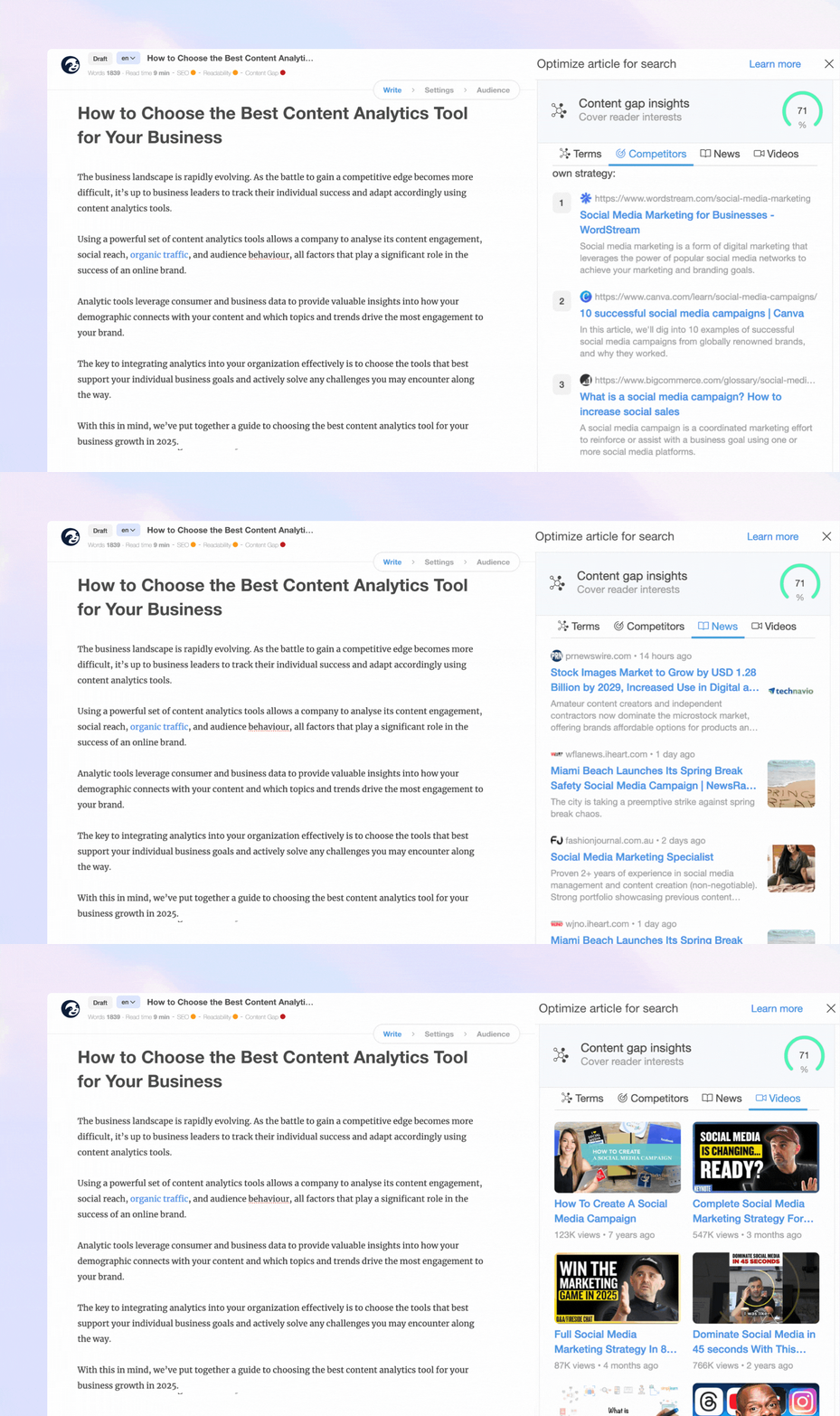
Content Gap Analysis
AI tools compare your content against the ranking ones and tell you what’s missing. That could mean related topics, FAQs, or visual aids that your competitors are already using.
Platforms like StoryChief incorporate these features into their content briefs. It helps teams create pages that meet both the level of detail and the competitive nature of how they need to rank in search engines. Filling in these holes enhances the depth of a page and its ranking potential.
Topic Clustering
You can use AI clustering tools to get related keywords and topics clustered into structured content plans. This method accommodates pillar pages and internal link strategies that enhance SEO as well as user experience.
StoryChief intelligently suggests relevant topics during editorial planning, so teams can match content with true search intent. Sites that employ the topic cluster model receive approximately 40% more organic traffic than those that don’t.
SERP Intent Analysis
To rank well, you must meet user intent. AI also allows marketers to understand what type of content is ranking for each keyword—be it blog posts, product pages, or comparison guides.
Through utilizing this information, you can adapt your style before writing. This will help optimize your content to match how people search and what they are hoping to find. In turn, this will improve the likelihood of ranking for terms while decreasing bounce rates.
Technical SEO Automation
Today, AI crawls your site and even automatically flags issues—sometimes including one-click fixes. AI-driven technical SEO services allow marketers to keep performance in check without having to manually audit campaigns. Botify research revealed that enabling automatic website health checking led to a 37% decrease in indexation errors on enterprise sites.
Competitive Monitoring
AI tools monitor how your competitors are ranking, which keywords they’re winning or losing on, and where they’re getting backlinks. Once you identify these backlink opportunities, a strategic link building approach helps you secure similar or better placements, strengthening your domain authority and closing the competitive gap identified through AI analysis. So by monitoring those trends, your team can swoop in on new opportunities fast or protect your top positions. This intel they gain helps not only shape your SEO but also ensures a content strategy more generally.
How to Choose the Right AI Marketing Services
An AI service may not be necessary for every business. Best practice is to start with the small steps that solve a problem and will integrate well into your current stack. Here are four things to think about before putting your money into AI marketing services:
1. Identify Your Bottlenecks First
Begin with asking: where is your team spending the most time—or getting the fewest results? If content is taking too long to publish, or leads aren’t converting, that’s where AI can help you out first.
For instance, if you are struggling to stay consistent on social, perhaps an AI scheduling and captioning tool may create a faster impact than analytics or SEO support.
2. Integration and Stack Compatibility
AI services are most useful when they integrate with the tools you already use. Find out whether the platform integrates with your CRM, CMS, ad manager, or analytics suite. Most solutions, such as StoryChief, are built to be a centralized system—from content planning through publishing, SEO, and analytics—in the same workflow.
3. Budget Considerations
Not all AI solutions are costly, but prices can depend on features, user seats, and support. Be explicit about whether you are buying a tool (DIY) or a managed service (done-for-you). Select services that solve a quantifiable problem and allow you to replace or lower one of your other costs (e.g., manual hours, external freelancers).
4. ROI Measurement
Before you press go, establish what success will look like. Is it time saved? Leads generated? Higher rankings?
AI doesn’t add value unless it leads to better outcomes, which are important to you. Seek out services with built-in reporting, predictive analytics, or real-time dashboards that can display progress in obvious terms.
The Future of AI Marketing Services
AI marketing platforms are transitioning from nice-to-have tools to core systems. Come 2026, the transition will be from basic automation to intelligent decision support. The norm will become hybrid teams and AI tools with human experts.
Data ethics, compliance, and measurable ROI will also be more top of mind. The best services will not only save time but also help you work more clearly and with greater control. It’s time to evaluate your stack and figure out where AI can have an immediate effect.
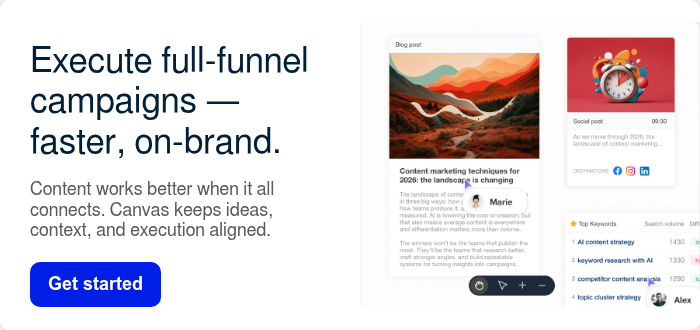
StoryChief Canvas enables marketers to plan, edit, and expand campaigns within a single visual workspace—automated, consistent with brand guidelines, and designed for practical marketing workflows. Try it free.