



Last reviewed: September 2026
The best marketing campaigns of 2026 did more than produce a memorable ad. They gave people a reason to participate, turned one idea into a story across several channels and connected attention to a measurable business result.
This guide collects 27 marketing and advertising campaigns from 2025 and 2026. Each example is reviewed using the same four criteria: the creative mechanic, the distribution model, the audience response and the evidence that the campaign worked.
For this guide, recent means launched, active or independently recognized between January 2025 and August 2026. Use the quick comparison below to find the examples most relevant to your goal, then explore the detailed breakdowns to see what your team can apply.
Quick answer: which recent marketing campaigns stand out in 2026?
Some of the strongest recent marketing campaigns include Columbia Sportswear's Expedition Impossible, adidas's Supernova Adaptive, Heineken's The Pub That Refused to Die, Coca-Cola's Feel It All and Squarespace's Super Bowl campaign. They stood out because the idea was easy to explain, closely connected to the brand and designed to travel across channels.
Found an idea worth adapting? StoryChief helps your team turn one core idea into briefs, articles, social posts and newsletters, then review and publish every asset from one campaign calendar. See how to turn one asset into a multi-channel campaign.
The best recent marketing and advertising campaigns of 2026
1. Columbia Sportswear: Expedition Impossible
Columbia Sportswear turned a familiar conspiracy theory into a brand challenge: prove that the Earth is flat and win the company. The idea connected directly to Columbia's identity as an outdoor exploration brand while giving audiences a simple claim they could debate, share and test.
The campaign worked because people were not only watching the idea. They could participate in it. Every reaction, attempt and argument became another distribution point for the brand.
Expedition Impossible received the 2026 Cannes Lions Grand Prix for Brand Experience and Activation. The jury highlighted how the campaign was timely, easy to understand and firmly grounded in the brand.
What marketers can borrow: A strong participation mechanic should be explainable in one sentence and make the product or brand belief essential to the idea.
2. adidas: Supernova Adaptive
adidas and TBWA Canada developed Supernova Adaptive, a performance running shoe inspired by and designed with the Down syndrome community. The innovation was not a promotional layer added after product development. The product itself carried the story.
That gave the campaign credibility. It addressed a real access problem, involved the community it was intended to serve and created a clear example of inclusive product design.
Supernova Adaptive received the 2026 Cannes Lions Innovation Grand Prix. The jury described it as a shift from a proof of concept to proof of meaningful change.
What marketers can borrow: The strongest innovation campaigns begin with a real improvement in the product or customer experience. Promotion becomes easier when proof is built into the idea.
3. Heineken: The Pub That Refused to Die
Heineken helped transform the struggle of a local Irish pub into a community ownership story. Instead of treating pub closures as a generic awareness topic, the campaign created a practical model that could help communities keep an important local meeting place alive.
The idea was culturally specific, useful and closely connected to Heineken's role in pub culture. It created a story that local media, communities and customers could all carry forward.
The Pub That Refused to Die won the 2026 Cannes Lions Creative Strategy Grand Prix. It showed how a brand can contribute to a community without forcing itself into the center of every message.
What marketers can borrow: Brand purpose becomes more credible when a campaign gives people a useful role instead of simply asking them to agree with a statement.
4. Wisła Kraków: Lucky Fan Index
Polish football club Wisła Kraków used supporter data and AI to create the Lucky Fan Index. The campaign turned the emotion of fandom into a commercial and loyalty mechanic, creating new ways to recognize supporters and strengthen their relationship with the club.
The idea stands out because it did not use AI as decoration. Technology supported a familiar human behavior: fans wanting to feel seen, rewarded and connected to their team.
Lucky Fan Index won the 2026 Cannes Lions Creative Commerce Grand Prix. The jury praised the way it combined emotional relevance with measurable commercial value.
What marketers can borrow: Customer data is most powerful when it improves the audience experience. Start with a behavior people already care about, then use technology to make that behavior more rewarding.
5. Coca-Cola: Feel It All
Coca-Cola built its 2026 World Cup activity around the emotional intensity of football. The Feel It All platform treated anticipation, frustration, hope and celebration as parts of the same fan experience.
The campaign included a film called No Better Feeling, which heightened the emotional reality of a single on-field moment. The larger platform gave Coca-Cola one central idea that could stretch across broadcast, sponsorship, social content and local activations.
The campaign shows why a platform is more valuable than a collection of unrelated assets. Every execution can change while the central message remains recognizable.
What marketers can borrow: Define the campaign idea before producing channel assets. A clear platform makes adaptation faster and helps the audience connect every execution to the same brand.
6. Yeti: Four Letters
Yeti and Wieden + Kennedy Portland transformed the brand's four-letter logo into a flexible creative system. Words such as wait, game, time and nope appeared alongside footage of people pursuing the activities they love.
The Four Letters platform launched with a 60-second film, shorter ambassador stories, out-of-home media, retail activity and limited stickers. It allowed Yeti to expand beyond hunting and fishing without abandoning its recognizable identity.
The mechanic was simple enough to repeat across sports, hobbies and cultural moments. It also invited customers to imagine which four-letter word represented their own commitment.
What marketers can borrow: Distinctive brand assets become more valuable when they are flexible. Find a repeatable creative rule that lets the audience recognize the brand before they see the full logo or product name.
7. The Honest Company: It's Time to Get Honest
The Honest Company entered the flushable wipes category with a campaign built around frank conversations about women's bathroom experiences. Created with agency Zambezi, It's Time to Get Honest used humor and direct language to discuss topics that advertising often avoids.
The campaign ran across connected TV, social media, out-of-home advertising, influencer partnerships and a physical newspaper called The Toilet Paper. That publication gave the campaign an additional object people could read, photograph and share.
The work was informed by commissioned research into how openly women discuss bathroom experiences. This gave the creative idea a stronger audience insight than a provocative headline alone could provide.
What marketers can borrow: If your campaign challenges a taboo, support it with research and a clear customer truth. Provocation works better when the audience recognizes the experience behind it.
8. Skittles: Uncomfortably Soft Gummies
Skittles introduced gummies with a surreal campaign created by TBWA Chiat Day. The work extended the brand's familiar Taste the Rainbow world while emphasizing the unusually soft texture of the new product.
Instead of relying on polished CGI or generic product shots, the campaign used physical production and deliberately strange scenes. That choice helped the work feel connected to the odd, tactile humor that already defines Skittles.
This is a useful example of product communication that does not feel like a feature demonstration. The product difference remains clear, but the brand's entertainment value carries the message.
What marketers can borrow: Translate a product attribute into a creative feeling. Softness, speed, simplicity or control can become a visual world instead of a bullet point.
9. Tecate: Welcome Back, Paisano
Tecate's Welcome Back, Paisano campaign focused on Mexicans returning home after living in the United States. Created with LePub Mexico City, the campaign used humor to welcome people back while connecting the brand to a specific cultural and emotional moment.
The idea moved beyond a general purpose statement. It addressed a defined group, a recognizable journey and a real moment of transition. That made the campaign more useful and emotionally precise.
The work shows how cultural relevance depends on specificity. Trying to speak to everyone would have weakened the idea.
What marketers can borrow: Define the audience and the moment before writing the message. The more precisely a campaign understands the situation, the more universal the emotion can feel.
10. Bosch: Impressive Innovation
Bosch used small, appealing robot characters to promote windshield wiper engineering. The Impressive Innovation campaign made a technical product easier to notice by turning precision and performance into a visual story.
Windshield wipers are not naturally an attention-grabbing category. The robots gave Bosch a distinctive device that could demonstrate reliability without relying on a dense explanation of components.
The creative stayed connected to the product. The characters were not random mascots. They represented the precision and engineering that Bosch wanted customers to remember.
What marketers can borrow: For technical products, use a memorable device to simplify the benefit. The creative should make the mechanism easier to understand, not distract from it.

11. Squarespace: Domain Names
Squarespace enlisted Emma Stone and director Yorgos Lanthimos to turn domain names into a cinematic noir story for the 2026 Super Bowl. The campaign avoided a conventional website-builder demonstration while keeping the product at the center of the plot.
That balance is important for software and B2B brands. Entertainment earns attention, but the audience should still understand what the company sells and why the product matters.
The film also helped Squarespace stand apart from the celebrity-heavy sameness of many Super Bowl ads by using a recognizable directorial style.
What marketers can borrow: Do not choose between creativity and product clarity. Build the product benefit into the conflict, joke or story that makes the campaign memorable.
12. Dove: Real Beauty meets Bridgerton
Dove and agency Mythology used a Bridgerton-style masquerade ball to continue the brand's long-running work around confidence and real beauty. The campaign borrowed a recognizable entertainment world without abandoning Dove's established purpose.
The cultural reference created immediate familiarity. More importantly, it served a message Dove has reinforced over many years, rather than replacing the brand platform with a short-lived trend.
This is the difference between using culture and chasing it. The campaign brought a new format to an existing belief.
What marketers can borrow: A cultural partnership works best when it gives a fresh expression to a consistent brand idea. Start with what your brand already stands for, then choose the cultural reference.
13. Equinox: Question Everything But Yourself
Equinox used AI-generated unreality as a contrast for physical confidence. Created with agency Angry Gods, Question Everything But Yourself responded to a culture filled with manipulated images, synthetic media and uncertainty.
The campaign positioned training and self-belief as something tangible in a digital environment that often feels artificial. Rather than promoting AI as a novelty, it used the tension around AI to strengthen Equinox's existing focus on personal discipline.
The idea connected a current cultural concern to a stable brand promise.
What marketers can borrow: Trend-based campaigns become stronger when the trend acts as a contrast for an enduring customer value. Do not let the technology become more memorable than your positioning.
The best marketing campaigns from 2025 that are still worth studying
The following campaigns remain useful because their creative mechanic can be adapted beyond the original moment. They also cover several search intents, including recent ad campaigns, brand campaigns, viral campaigns and innovative marketing examples.
14. ChatGPT: the first major brand campaign
ChatGPT's first major brand campaign moved away from abstract visions of artificial intelligence. It showed familiar situations in which AI could help with planning, cooking, learning and work.
That made an unfamiliar technology feel more personal. The campaign focused on moments people could recognize instead of leading with technical capabilities.
For technology brands, this is an important distinction. A product can be advanced while the campaign remains emotionally simple.
What marketers can borrow: Start with the human situation, not the feature list. Show what changes in a person's day when the product is present.
15. Mattel: Barbie with Type 1 diabetes
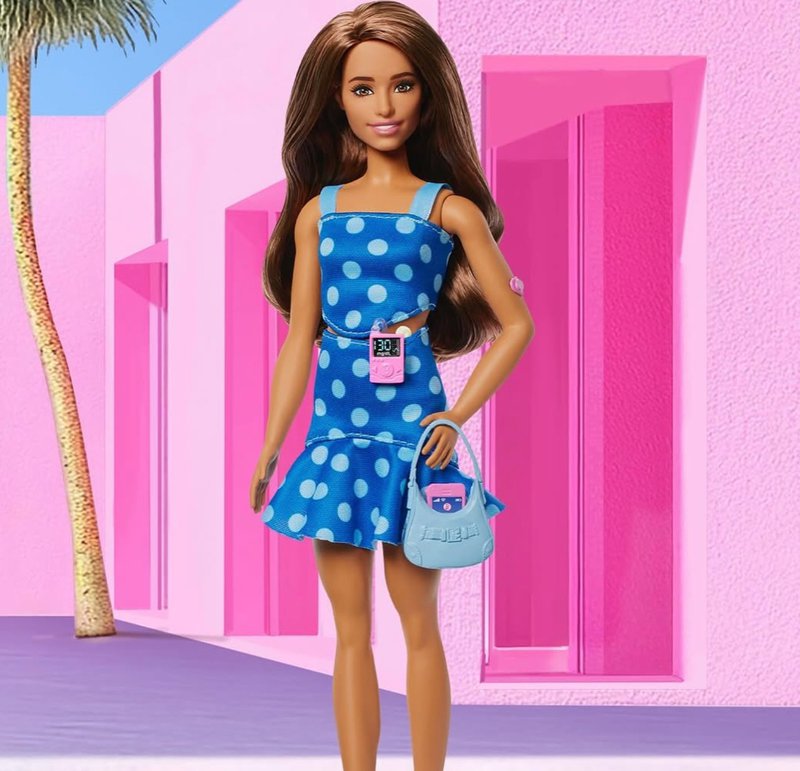
Mattel partnered with Breakthrough T1D to introduce the first Barbie doll with Type 1 diabetes. The doll included details such as a continuous glucose monitor and insulin pump, with input from people who understood the lived experience.
The launch became more than a product announcement. It represented children who rarely saw their daily medical reality reflected in a globally recognized toy.
The collaboration gave the campaign credibility and helped the product carry a broader message about inclusion.
What marketers can borrow: Representation requires participation from the people being represented. Involve the community early and let accurate product details support the story.
16. Axe: Grab the Sweet
Axe transformed a Belgian bus shelter into a giant playable arcade experience. People waiting for transport could interact with the installation, turning an ordinary part of the day into a branded moment.
The activation was designed to work at two levels. It entertained the people physically present, while videos and photos extended its reach through social media.
That second layer is what separates a useful experiential campaign from a one-location stunt. The physical idea created its own distribution assets.
What marketers can borrow: Design experiential campaigns for both participants and viewers. Ask what someone will record, share or explain after the event.
17. Heinz: Looks Familiar
Heinz used the visual familiarity of its products to create advertising that did not always need to show the full logo. The recognizable bottle shape, red color and product cues did the branding work.
The campaign demonstrated the commercial value of distinctive brand assets. Years of consistent design made it possible for Heinz to remove information while remaining recognizable.
This type of confidence cannot be created in one campaign. It is the result of repeated visual and verbal choices.
What marketers can borrow: Identify the smallest set of cues that make your brand recognizable. Repeat them consistently across campaigns instead of reinventing the system every time.
18. Waitrose: The Perfect Gift
Waitrose created a four-minute festive romantic comedy starring Keira Knightley and Joe Wilkinson. A meeting over a block of cheese became the opening of a self-aware love story.
The film felt closer to entertainment than a traditional supermarket promotion, but the product still played a meaningful role. The longer format allowed Waitrose to build characters and give audiences a reason to watch beyond a product offer.
The campaign shows how familiar seasonal advertising can feel fresh when the brand changes the format.
What marketers can borrow: If the category follows a predictable campaign formula, experiment with genre. A tutorial, documentary, game or short film can carry the same message differently.
19. Aldi and Lewis Capaldi: Cap-Aldi
Aldi invited Lewis Capaldi to perform a surprise rooftop concert at a Nottingham store. The brand temporarily became Cap-Aldi, using a simple name joke to connect the artist, the location and the campaign.
The event promoted Capaldi's new music while giving shoppers an unexpected experience. Because the idea was visually obvious, it was easy for press and social audiences to summarize.
The campaign also built on Aldi's history of playful local rebranding, making the stunt feel consistent with the brand.
What marketers can borrow: The best collaborations create value for both partners and produce a story that can be explained in one headline.
20. Jet2: Nothing Beats a Jet2holiday
Jet2 benefited from a campaign asset that audiences could easily reuse: a recognizable audio line paired with holiday footage. Social users began placing the cheerful sound over travel mishaps, creating an ironic contrast between the brand promise and the video.
The important lesson is not that every brand needs a viral sound. Jet2 had built a distinctive audio cue that remained recognizable even when audiences changed the context.
User participation extended the life of the campaign far beyond the original ad placement.
What marketers can borrow: Build campaign assets that can travel independently. A line, sound, visual frame or template gives audiences something they can reuse.
21. Liquid Death and Ozzy Osbourne: Infinite Ozzy
Liquid Death sold a limited collection of iced tea cans that Ozzy Osbourne had drunk from, preserving traces of his DNA. The absurd product drop matched the brand's established heavy-metal identity and turned a beverage can into a collectible object.
The idea attracted attention because it pushed an existing brand personality to an extreme. It would have felt random from most beverage companies, but it was believable from Liquid Death.
That fit matters. Shock without brand consistency may produce views without building memory.
What marketers can borrow: Bold ideas work when they amplify an existing brand truth. Before approving a stunt, ask whether another brand could do exactly the same thing.
22. Canva: Can You Make the Logo Bigger?
Canva and Stink Studios turned London's Waterloo Station into a visual joke about one of the creative industry's most familiar requests: can you make the logo bigger?
The campaign used an inside joke to connect with designers, marketers and agencies. It demonstrated empathy for the audience while giving Canva a reason to show its own design confidence.
Industry humor works because it signals membership. The brand understands the conversations its customers already have.

What marketers can borrow: Look for the repeated sentence, frustration or ritual that everyone in your category recognizes. Shared language can become a fast route to relevance.
23. Duolingo: the death and return of Duo
Duolingo announced that its green owl mascot had died, then developed the premise through social posts, reactions and a later resurrection. Followers, brands and creators joined the storyline, turning the campaign into a participatory internet event.
The campaign worked because Duo already had a strong personality and an active community. Duolingo did not invent that relationship for one post. It used years of distinctive social behavior as the foundation for a larger narrative.
The storyline also unfolded in stages, giving people multiple reasons to return.
What marketers can borrow: Episodic campaigns create more participation than isolated announcements. Give the audience an open question, a role and a reason to follow the next chapter.
24. Nike: So Win
Nike returned to the Super Bowl with So Win, a black-and-white film centered on elite female athletes and the criticism women face when they compete and succeed.
The campaign paired a clear cultural tension with Nike's long-standing focus on ambition and performance. It extended beyond the television spot through murals, athlete films and social discussion.
According to Adweek's 2026 Media Plan of the Year coverage, featured athletes experienced a major increase in online mentions and the campaign captured a significant share of conversation on the night.
What marketers can borrow: Cultural relevance is strongest when the issue reinforces a belief the brand has expressed consistently over time.
25. Chili's: Fast Food Financing
Chili's opened a temporary Fast Food Financing shop beside a McDonald's in New York. The fake lending office joked about rising fast-food prices while introducing Chili's Big QP burger as an alternative.
The campaign combined a real customer tension, a competitor reference and a physical experience. People could understand the joke immediately, while the location made the comparison difficult to miss.
Marketing Dive reported that the activation generated large-scale earned media attention. The idea traveled because the stunt was visual, timely and connected to the product offer.

What marketers can borrow: Competitive campaigns work best when they begin with a customer problem. The competitor should sharpen the contrast, not become the entire idea.
26. Coors Light: Case of the Mondays
Coors Light expanded its Super Bowl activity into a month-long idea about Monday frustration. The campaign included a cold face roller, intentionally misspelled creative and limited Mondays Light packaging.
Instead of concentrating everything in one expensive television spot, the brand created several smaller moments that audiences and media could discuss before and after the game.
The campaign demonstrated how a single theme can generate product drops, social posts, PR stories and retail activity.
What marketers can borrow: Treat the launch date as one point in the campaign, not the whole campaign. Build anticipation, participation and follow-up into the plan.
27. GoDaddy: Act Like You Know
GoDaddy used actor Walton Goggins and his fictional business, Walton Goggins Goggle Glasses, to demonstrate its Airo tools during the Super Bowl. The campaign mixed celebrity humor with a real product use case.
That structure helped GoDaddy avoid a common problem in technology advertising: an entertaining story that leaves the audience unsure what the product does. The fictional business gave the AI tools a job and a visible outcome.
The campaign also extended beyond the ad because the business concept could live through social content, product demonstrations and press coverage.
What marketers can borrow: If you use a celebrity or creator, give them a role that demonstrates the product. Recognition should open the door, while the use case delivers the message.
What the best advertising campaigns have in common
The examples above span product launches, social campaigns, Super Bowl ads, experiential activations and community programs. The strongest campaigns still share several strategic patterns.
They are easy to explain
Expedition Impossible, Cap-Aldi and Fast Food Financing can each be summarized in one sentence. That simplicity helps employees, journalists, creators and customers repeat the idea accurately.
If a campaign needs a long explanation before it becomes interesting, the mechanic may be too complicated.
They make participation obvious
Duolingo invited people into a storyline. Columbia invited people to challenge a claim. Yeti offered a flexible visual language customers could apply to their own interests.
Participation does not always require a competition. It can be a template, reaction, shared phrase, creator prompt, quiz or useful tool.
They connect the creative idea to the product
Squarespace made domain names part of the story. Bosch used characters to communicate engineering. adidas built the campaign around a product change.
The product does not need to dominate every scene, but the campaign should become weaker if the product is removed. That is a useful test of strategic fit.
They are designed for several channels
Strong campaigns rarely begin as one ad that is later resized. They begin with a central idea that can produce films, articles, social posts, creator collaborations, events, email and sales material.
That is why distribution planning should happen before production. A campaign becomes more efficient when every channel has a clear role.
They provide evidence
Awards, participation, sales lift, brand search, earned media and qualified pipeline can all be useful evidence, depending on the objective.
The metric must match the goal. A campaign designed to generate revenue should not be judged only on impressions. A purpose campaign should not rely only on positive comments.
How to build an innovative marketing campaign without a huge budget
You do not need a celebrity, a Super Bowl placement or a physical activation to apply these lessons.
1. Choose one audience and one tension
Start with a specific situation your audience recognizes. What are they trying to achieve? What makes the process frustrating, expensive, confusing or slow?
2. Define the campaign in one sentence
Write a plain-language explanation of what people will see or do. If the idea cannot be summarized clearly, simplify it before producing assets.
3. Give the audience a role
Decide whether people will contribute, compare, remix, calculate, vote, learn or share. The action should feel natural and require little explanation.
4. Plan the distribution system
Map the core asset, supporting articles, social formats, email, creator activity and follow-up content. Give every channel a purpose instead of publishing the same message everywhere.
If you need a repeatable process, use a shared campaign calendar to connect briefs, production, approval and publishing.
5. Choose the success metric before launch
Awareness, participation, lead generation and revenue require different measurement plans. Agree on the primary metric and the supporting signals before the creative goes live.
StoryChief helps teams move from a campaign idea to a coordinated set of channel-ready assets. You can plan the campaign, manage briefs and approvals, publish across channels and review performance from one workflow.
FAQ about recent marketing campaigns
What are the best marketing campaigns of 2026?
Standout campaigns include Columbia Sportswear's Expedition Impossible, adidas's Supernova Adaptive, Coca-Cola's Feel It All, Yeti's Four Letters and Squarespace's Domain Names. The best example depends on the goal. Columbia is a strong participation campaign, adidas connects innovation to product design, Coca-Cola demonstrates a flexible global platform, Yeti uses distinctive brand assets and Squarespace combines entertainment with product clarity.
What makes a marketing campaign innovative?
An innovative campaign changes how people experience, understand or participate in a brand. Innovation can come from the product, format, distribution model, audience role or use of data. New technology is not required. The idea should solve a real communication problem and create value that a conventional ad would not provide.
What is the difference between a marketing campaign and an advertising campaign?
A marketing campaign coordinates several activities around one objective and message. It can include content, email, events, creators, PR, sales enablement and advertising. An advertising campaign is the paid-media component. The terms often overlap, but a complete marketing campaign usually includes more than ads.
Which campaign examples delivered measurable results?
Several campaigns in this list have documented awards, participation or commercial outcomes. adidas, Columbia Sportswear, Heineken and Wisła Kraków received 2026 Cannes Lions Grand Prix awards. Nike's So Win generated strong conversation and athlete visibility. Chili's and Coors Light reported large earned-media reach. Always check how a result was measured before comparing campaigns.
How can a small team adapt ideas from large brand campaigns?
Copy the mechanic, not the budget. A small team can create a benchmark, quiz, useful template, local collaboration, customer challenge or recurring content series. Focus on one audience insight and one action. Then adapt the same idea across the channels your team can maintain consistently.
How do you plan a multi-channel marketing campaign?
Start with the audience, objective and central message. Build one core asset or experience, then define how each channel will contribute. Assign owners, deadlines and approval steps before production. Finally, choose the metrics that will show whether the campaign generated attention, participation, leads or revenue.
Final takeaway
The best recent marketing campaigns of 2026 are not memorable only because they are funny, emotional or visually impressive. They are memorable because the idea is clear, the audience has a role and the creative connects to something the brand can credibly own.
Start with a real customer tension. Build one mechanic people can understand. Plan how the idea will travel before producing individual assets. Then measure the result that matters to the business.
Inspiration is useful, but execution creates the outcome.
Turn your next campaign idea into a coordinated multi-channel workflow with StoryChief.