




Choosing the right marketing automation platforms can completely transform the way you run your marketing in 2026. Instead of managing multiple tools or guessing what your audience wants, the right platform helps you automate your workflows and manage every channel from one place.
In this guide, you’ll find a breakdown of the best marketing automation platforms to consider in 2026, what they offer, how they integrate with your existing stack, and which ones are best suited for different types of teams. By the end, you’ll have a clear idea of which platform fits your goals and helps you streamline your entire marketing operation.
What are marketing automation platforms?
Marketing automation platforms help you streamline and scale your marketing activities by automating repetitive tasks, improving personalization, and connecting your workflows across channels.
Instead of manually sending emails, posting on social media, or tracking lead behavior, you can use a marketing automation platform to do all of that for you, based on rules, triggers, and customer actions.
How they work
These platforms work by using workflows and triggers.
- A workflow is a sequence of automated actions that you set up—such as sending an email, assigning a lead to sales, or publishing content.
- A trigger is what activates that workflow. This could be someone joining your list, downloading a guide, clicking a link, or visiting a specific page.
- With audience segmentation, you group people based on behaviors, demographics, or intent so you can send more relevant messages.
- Through cross-channel automation, you can coordinate email, social posts, website content, SMS, push notifications, and more, all from a single dashboard.
What to look for in marketing automation platforms in 2026
Choosing the right marketing automation platforms in 2026 can feel confusing, but when you know what to look for, the decision becomes much easier.
You want a tool that not only handles your current needs but also grows with you as your business scales and your marketing becomes more advanced. Here’s what you should prioritize:
1/ AI-powered automation features
In 2026, AI isn’t a bonus; it’s the standard. You should look for platforms that help you create smarter workflows, predict customer behavior, generate content, optimize campaigns automatically, and track your brand visibility. AI should save you hours, not add extra complexity.
2/ Unified customer and content data
Your marketing is only as good as the data behind it. The best platforms give you a single view of your audience and the content you produce, including content generated with the help of AI writing .
When everything is centralized, you can easily personalize campaigns, track performance, and make better decisions without switching between tools.
3/ Multi-channel publishing capabilities
You’re no longer marketing on just one or two channels. By 2026, your audience is everywhere: email, social media, blogs, newsletters, landing pages, SMS, and more. Choose a platform that lets you manage and automate all these channels from one place so you stay consistent without the manual workload.
4/ Collaboration and workflow management
If you work with a team, you need smooth collaboration. Look for features like approval flows, shared calendars, task assignments, and real-time content editing. These platforms ensure your content moves from idea to publication without delays or communication issues.
5/ Integrations with CRM, CMS, and analytics tools
Your automation platform should fit easily into your existing ecosystem. Integrations with CRM systems (like HubSpot or Salesforce), CMS platforms (like WordPress or Webflow), analytics tools, and even financial features like an Invoicing API ensure your data flows clearly, and your campaigns stay aligned across the entire customer journey.
6/ Scalability and pricing flexibility
Your needs today won’t be the same six months from now. Pick a platform that scales with your team size, content volume, and automation complexity—without forcing you into enterprise pricing too early. Flexible plans and modular add-ons help you grow at your own pace.
The 10 Best Marketing Automation Platforms in 2026
1/ StoryChief (Best Overall for Content-Driven Teams)

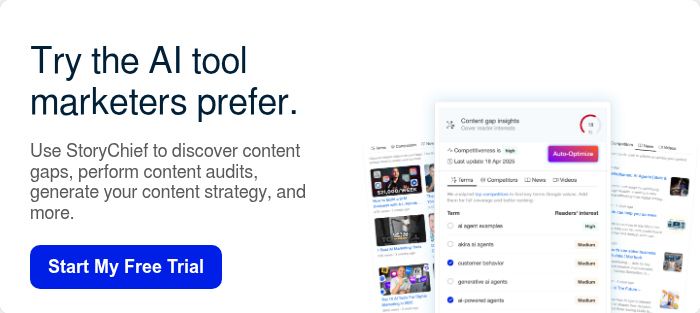
StoryChief is a content-focused marketing automation platform that helps you plan, create, collaborate, and publish across all your channels from one place. You can manage blogs, social posts, newsletters, and multi-step content workflows without switching between tools.
Features like the content calendar, built-in SEO assistant, approval flows, and content repurposing tools make it easy to keep your entire content operation organized and consistent.
The platform includes AI-powered tools for generating briefs, optimizing articles, writing content, and repurposing posts for different channels. You can automate publishing, streamline team collaboration, and connect Storychief with WordPress, Webflow, HubSpot, Mailchimp, LinkedIn, Google Business Profile, and many more. If your marketing strategy relies heavily on content, Storychief gives you the structure and automation you need to scale it efficiently.
Key Features
When you use Storychief, you get access to a full content operations suite:
- Multichannel publishing to blogs, social profiles, newsletters, and more
- Content calendar for planning and collaboration
- SEO assistant to optimize articles before publishing
- Approval workflows for cross-team coordination
- Campaign & content analytics to track reach and engagement
- Content collaboration tools for writers, editors, and stakeholders
- Content repurposing tools to turn long-form content into social posts, newsletters, and snippets instantly
- Content editor with real-time SEO scoring and keyword suggestion
- Content audit for updating existing pages to improve rankings
Everything is built to help you produce high-quality content faster and distribute it everywhere with a single click.
Integrations
StoryChief integrates easily with the tools you already rely on, including:
- CMS platforms: WordPress, Webflow, Shopify, Drupal
- CRMs & Marketing tools: HubSpot, ActiveCampaign, Mailchimp
- Social networks: LinkedIn, Facebook, Instagram, X, Google Business Profile
- Cloud storage: Google Drive, Dropbox
- Analytics tools: Google Analytics, Looker Studio
These integrations help you build a connected, efficient, and fully automated content marketing ecosystem.
2/ HubSpot Marketing Hub

HubSpot gives you an all-in-one marketing and CRM ecosystem where you can manage emails, automation workflows, landing pages, ads, and customer data in one place. You get access to advanced lead scoring, segmentation, reporting, and behavior-based triggers that help you design personalized customer journeys at scale.
It’s especially useful when you want your marketing and sales data to stay perfectly aligned, as everything runs on the same CRM. If you’re looking for a platform that combines automation with pipeline management and analytics, HubSpot offers a powerful, unified solution, especially for growing teams that need structure.
Key Features
With HubSpot Marketing Hub, you get a complete suite of tools that help you run your entire marketing operation from one platform. You can:
- Build automated email campaigns and behavioral workflows
- Create landing pages, pop-ups, and forms without coding
- Manage contacts using a built-in CRM
- Score and segment leads based on engagement
- Track campaign performance with detailed analytics
- Manage ads across Google, Facebook, and LinkedIn
- Use built-in content tools for blogging and SEO
Integrations
HubSpot integrates with a wide range of platforms, including:
- CRM & Sales: Salesforce, Pipedrive, Zoho
- CMS: WordPress, Webflow, Shopify
- Advertising: Google Ads, Meta Ads, LinkedIn Ads
- Communication: Slack, Zoom, Gmail, Outlook
- Data & Analytics: Google Analytics, Databox, Looker Studio
- Automation & Ops: Zapier, Make, Segment
These integrations let your entire tech stack sync with HubSpot, keeping your data consistent across all teams and tools.
3/ GetResponse

GetResponse is an all-in-one email marketing and automation platform designed to help you build, nurture, and convert your audience across multiple channels. While it started as a simple newsletter tool, the platform has matured into a complete lifecycle marketing solution that includes email campaigns, landing pages, SMS, push notifications, webinars, funnels, and ecommerce automation.
This makes it especially valuable if you want to manage your entire customer journey without having to manage multiple disconnected tools.
Key Features
GetResponse provides a set of tools that support end-to-end marketing workflows. You can:
- Build advanced email campaigns using an intuitive, AI-assisted email editor
- Create multi-channel automation workflows with email, popups, SMS, push notifications, and transactional messages
- Run ecommerce automations like abandoned cart recovery, product recommendations, price-drop triggers, and cross-sell flows
- Capture leads using AI-powered landing pages, forms, popups, and built-in webinar hosting
- Use analytics to distinguish bots from humans, analyze sales revenue, and review conversion attribution
- Utilize AI tools for email generation, landing page creation, and product recommendations
- Build and publish complete marketing funnels for lead nurturing, sales, or webinar registration
Integrations
GetResponse integrates with a wide range of e-commerce, CMS, and marketing tools, including:
- E-commerce: Shopify, WooCommerce, BigCommerce, PrestaShop, Magento
- CMS: WordPress, Drupal, Joomla
- CRM & Sales: HubSpot (via API), Salesforce (connectors), Pipedrive
- Payments & Checkout: Stripe, PayPal, Square
- Webinar & Event Tools: Zoom (via integrations), Calendly
- Analytics: Google Analytics, Google Tag Manager
- Automation: Zapier, Make, webhooks, custom API
These integrations help you sync sales data, customer behavior, campaign activity, and website engagement so your automations stay accurate and personalized.
4/ Marketo Engage (Adobe)

Marketo is built for enterprise-level marketing teams that need advanced lead nurturing, rich segmentation, and tight alignment with sales. The platform handles multi-step campaigns, account-based marketing, scoring models, and deep analytics, making it ideal when you're managing long, complex buying cycles.
If your marketing team works heavily with sales reps, Marketo helps you track intent signals, automate follow-ups, and deliver personalized content across email, ads, and web experiences. It’s a reliable system suited for larger organizations with high-level automation needs.
Key Features
Marketo Engage gives you an enterprise-grade marketing automation system designed for complex B2B journeys. You can:
- Build multi-step, multi-channel campaigns with advanced flow logic
- Score leads using detailed demographic and behavioral criteria
- Run account-based marketing (ABM) programs at scale
- Personalize content across email, web, and ads
- Automate sales handoffs with rich lead insights
- Use advanced analytics to measure engagement and pipeline impact
- Manage marketing activities across global teams with strong governance tools
Integrations
Marketo integrates deeply with enterprise ecosystems, including:
- CRMs: Salesforce (native), Microsoft Dynamics, SAP
- Web & CMS: WordPress, Drupal, Adobe Experience Manager
- Advertising: Google Ads, LinkedIn Marketing Solutions, Meta Ads
- Data & Analytics: Snowflake, Power BI, Google Analytics
- Sales Tools: Outreach, Salesloft
- Automation & Ops: Zapier, Segment, Workato
These integrations ensure better data flow between marketing, sales, and analytics systems, crucial for enterprise operations.
5/ Mentionlytics

Mentionlytics is a social listening and brand-monitoring platform that helps you track conversations about your business, competitors, or industry across social media, blogs, forums, and major online publications. It gives you real-time insights into how people talk about your brand and allows you to react quickly to emerging trends, customer complaints, and viral opportunities.
This tool is especially useful for marketing teams, agencies, and PR departments that rely heavily on brand reputation, social presence, and competitive monitoring. By unifying mentions from all over the web and analyzing sentiment, engagement, and reach, Mentionlytics helps you make more informed decisions around content, customer experience, and crisis management.
Key Features
With Mentionlytics, you get access to a comprehensive social monitoring and reputation-management suite. You can:
- Track brand, competitor, or keyword mentions across social media, blogs, news sites, forums, and the broader web
- Analyze sentiment, tone, and emotional intent behind user conversations
- Monitor share-of-voice, brand reach, and trending topics in your industry
- Receive real-time alerts for spikes in activity, crises, or viral moments
- Compare performance against competitors using detailed analytics
- Create customizable reports and dashboards for internal use or clients
- Identify influencers or recurring sources driving conversations
Integrations
Mentionlytics integrates with a range of platforms to centralize monitoring and reporting:
- Social & Media Sources: X (Twitter), Facebook, Instagram, YouTube, TikTok, LinkedIn, Reddit, Telegram, Bluesky, blogs, forums, review sites, and global news outlets. Also, image recognition.
- Analytics & Reporting: Customizable reports with AI insights, real-time data, and alerts.
- Automation & Workflows: API & webhooks for sending mention data to CRMs, dashboards, and internal tools
- Collaboration Platforms: Slack, Hootsuite, Looker Studio (via exports or reporting workflows)
These integrations help you sync brand insights, alerts, and engagement data across your marketing and communication tools.
6/ Surfer SEO

Surfer is an AI-powered content-optimization and on-page SEO platform built to help you create, audit, and optimize content based on data from top-ranking pages, removing much of the guesswork from SEO.
Instead of manually trying to guess word counts, keyword usage, or content structure, Surfer analyzes hundreds of on-page signals and helps you align your content with what’s already performing well, giving you a systematic, data-driven approach to content creation.
What makes Surfer especially relevant in today’s AI-driven marketing landscape is its AI Tracker. As search and discovery increasingly shift toward generative models, the AI Tracker shows not only how your content performs in Google but also how it appears across platforms like ChatGPT and Perplexity.
Key Features
Surfer gives you a full suite of content optimization capabilities, including:
- SERP Analyzer that breaks down ranking factors used by top competitors
- Keyword Research & Topic Clusters to build content plans and topical authority
- Grow Flow weekly AI guidance for improving SEO performance
- NLP-powered suggestions to help content feel more natural while staying optimized
- AI writing tools to support your writing efforts and optimize it for AI search intent
Integrations
Surfer integrates with tools across your writing, publishing, and automation workflow, including:
- CMS & Publishing: WordPress, Google Docs, Contentful
- Writing & Editing Tools: Jasper AI, Grammarly (via browser extensions), Notion (via add-ons)
- SEO & Analytics: Google Search Console, Google Analytics
- Automation: Zapier, Make, Surfer API (custom integrations)
These integrations allow you to write, optimize, and publish SEO-ready content without switching platforms.
7/ Integrately

Integrately is a no-/low-code automation and integration platform that helps you connect multiple apps and automate workflows without needing technical skills.
It works as a kind of “link” between the different tools you use, CRM, email, forms, CMS, ads, etc., letting you move data, trigger actions, and automate sequences with a few clicks rather than writing custom code or manual scripts.
Key Features
With Integrately, you can:
- Connect 1,400+ apps with ready-to-use automations so you don’t have to build workflows from scratch.
- Use a visual automation builder where you select a trigger (e.g., form submission, new CRM entry, email opened) and set subsequent actions across other apps, all with zero coding required
- Modify data fields dynamically before passing them between apps (for example, cleaning or reformatting contact data), helpful when different apps expect data in different formats.
- Automate multi-step, multi-app workflows (not just simple one-to-one integrations), including conditional logic (“if/else” paths), branch workflows, and complex sequences.
Integrations
Integrates with one of the extensive collections of marketing, sales, and business apps, including:
- CRM & Sales: HubSpot, Salesforce, Pipedrive, Zoho CRM
- Email & Marketing: Mailchimp, ActiveCampaign, GetResponse, Klaviyo
- CMS & Websites: WordPress, Webflow, Shopify
- E-commerce: WooCommerce, Magento, BigCommerce
- Forms & Lead Capture: Typeform, Jotform, Google Forms
- Productivity & Collaboration: Trello, Asana, Slack, ClickUp
- Automation: Zapier (cross-compatibility), Make
- Payments & Invoicing: Stripe, PayPal
These integrations help you connect your entire marketing, sales, and operations stack so data flows automatically across all your tools.
8/ Creatio (Creatio Marketing)

Creatio is a no-code marketing automation and CRM platform designed to help you build, automate, and optimize complex customer journeys without relying on developers. The platform combines campaign management, lead nurturing, segmentation, and omnichannel communication into a single ecosystem, giving you full visibility of every customer touchpoint.
With its drag-and-drop process designer, you can automate marketing workflows, build custom logic, and personalize communication across email, ads, events, and more. It’s especially powerful for teams that need a unified system for marketing and sales.
Key Features
With Creatio, you get a unified marketing automation and CRM environment that helps you:
- Build omnichannel campaigns using a visual, drag-and-drop campaign designer
- Automate lead nurturing, scoring, and qualification workflows
- Manage customer and account profiles with a detailed 360° data view
- Personalize communication across email, events, ads, and web
- Segment audiences using behavioral, demographic, and CRM data
- Capture and track website visitor behavior in real time
- Use dashboards and analytics to monitor campaign performance and revenue impact
- Customize workflows, UI components, and processes using no-code tools
- Enhance marketing execution with AI agents that improve lead qualification, tailor outreach, and accelerate campaign setup
Integrations
Creatio integrates across multiple ecosystems, allowing you to connect marketing, sales, and operations. It supports integrations through:
- Creatio ecosystem: Creatio Sales, Creatio Service, Creatio Studio
- Email & communication: SendGrid, Elastic Email, Twilio
- Data & analytics: Google Analytics, Power BI, Tableau
- CRM & ERP: Microsoft Dynamics, SAP, Oracle (via connectors/APIs)
- Automation: Zapier, Make, REST API, webhooks
- Third-party apps: Available via Creatio Marketplace
These integrations ensure your customer data, marketing activities, and business operations stay aligned across the organization.
9/ Reteno

Reteno is a marketing automation and user-engagement platform built for mobile apps and web-first businesses that want to automate customer communication across multiple channels.
It focuses on lifecycle marketing, allowing you to trigger messages based on user behavior — such as app usage, in-app events, or website interactions — and deliver them through push notifications, email, SMS, in-app messaging, web push, or messenger.
Reteno helps you unify user data into a single profile, segment audiences, and automate campaigns designed to boost retention, engagement, and revenue.
Key Features
With Reteno, you get a comprehensive automation and engagement suite that allows you to:
- Automate campaigns across multiple channels, mobile push, web push, in-app messages, email, SMS, and messenger notifications.
- Build event-driven workflows and triggers based on user behavior (app events, website activity, transactional events) for onboarding, re-engagement, abandonment recovery, and more.
- Create unified user profiles (with fields like device, email, phone, and custom attributes) that enable detailed segmentation and personalization.
- Run A/B testing and automated experimentation to optimize messages, timing, and channel sequences.
- Access behavioral analytics (cohort analysis, funnel tracking, conversion tracking, churn signals) to understand user actions and refine automation flows accordingly.
Integrations
Reteno integrates with a variety of tools to help unify user data and behavior across your stack, including:
- Analytics & Product Data: Amplitude, Mixpanel, Google Analytics
- CMS & Web: WordPress, custom websites (via SDK/API)
- CRM & Backend Systems: Salesforce (via connectors), HubSpot (via API), internal databases
- Mobile & App Infrastructure: Firebase, custom mobile apps (Android/iOS SDKs)
- Automation: Zapier, Make, webhooks
- Data Pipelines: Segment, RudderStack
- Other Systems: Payment gateways, ERP, and warehouse tools (via API)
These integrations enable you to sync behavior, triggers, and user attributes in real time so your automation flows remain accurate and personalized.
10/ Wellows (Automating AI Search Visibility)

Wellows is a new kind of marketing automation platform built for the AI-search era. Instead of automating emails or social posts, Wellows automates your brand’s discoverability across AI search engines—a channel that’s becoming essential as users rely more on generative AI tools to find products, answers, and recommendations.
With its Implicit Mention and Explicit Mention systems, Wellows helps startups and marketers appear in the right AI-generated answers, summaries, comparisons, and recommendation lists. Instead of hoping algorithms pick up your brand, Wellows automates the signals that AI systems look for and increases the chances that your product shows up when someone searches for solutions in AI tools like ChatGPT, Perplexity, or Gemini.
Key Features
With Wellows, you get AI-focused automation tools that help your brand stay visible in an evolving search environment. You can:
- Track how often your brand appears in AI search engines
- Find implicit and explicit mentions to strengthen AI visibility
- Monitor your brand across multiple AI systems
- Identify keywords, topics, and queries where your brand should be showing up
- Analyze visibility health to stay top-of-mind in AI-generated answers
Every feature is designed to help you create a strong, consistent AI presence—without manually checking every AI engine or prompt.
Integrations
Wellows connects seamlessly with your marketing stack by pulling in data and sending insights where you need them. Current integrations include:
- Analytics: Google Search Console
- Collaboration: Slack
- Web systems & CMS: WordPress
- AI Platforms: ChatGPT, Perplexity, Gemini, AI Overview, AI Mode
These integrations ensure you can monitor, improve, and automate your AI search visibility without adding extra complexity to your workflows.
11/ ActiveCampaign
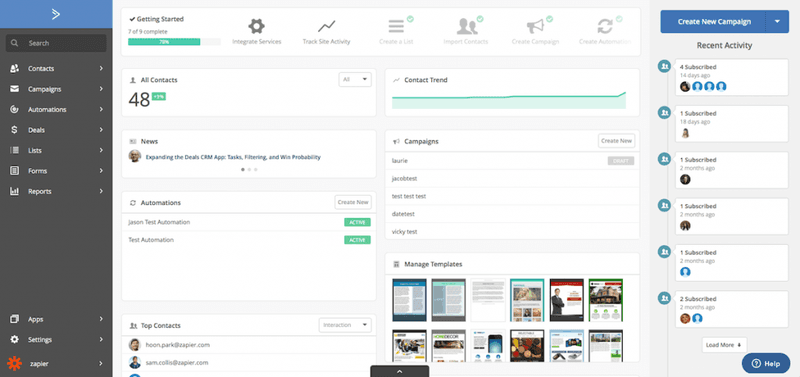
ActiveCampaign is a marketing automation platform built for businesses that want deeper customer journeys without the complexity of enterprise software. It combines email marketing, automation, segmentation, CRM functionality, and customer experience tools in one system.
What makes it especially useful is how easily you can build behavior-based automations around lead capture, follow-up, nurturing, and post-purchase engagement. If you want a platform that balances power and usability, ActiveCampaign is a strong fit for growing teams that need more than basic email sequences.
Key Features
With ActiveCampaign, you can:
- Build automated email workflows based on customer behavior and lifecycle stage
- Segment contacts dynamically using engagement, purchase, and profile data
- Personalize campaigns based on actions, attributes, and timing
- Manage sales handoffs and follow-up processes with built-in CRM functionality
- Connect marketing and customer experience data to create more relevant campaigns
Integrations
ActiveCampaign connects with a wide range of business tools, including:
- CRM & Sales: Salesforce, Microsoft Dynamics, Pipedrive
- E-commerce: Shopify, WooCommerce, BigCommerce
- CMS & Websites: WordPress, Webflow
- Collaboration: Slack
- Advertising & Lead Gen: Facebook, LinkedIn Ads, Google Ads
- Automation: Zapier, API-based custom integrations
These integrations help you connect contact data, purchase behavior, and campaign activity across your full marketing stack.
12/ Klaviyo

Klaviyo is a marketing automation platform designed for B2C and ecommerce brands that rely on personalized messaging across multiple channels. It brings customer data, segmentation, and automation together so you can launch highly targeted campaigns without juggling disconnected tools.
It’s particularly strong if you want to automate communication across email, SMS, mobile push, and reviews while keeping reporting centralized. For brands focused on retention, lifecycle marketing, and revenue attribution, Klaviyo is one of the strongest options available.
Key Features
With Klaviyo, you can:
- Build cross-channel automations across email, SMS, and push notifications
- Create highly specific audience segments using real-time and historical data
- Personalize campaigns with behavioral, transactional, and profile data
- Use AI-assisted insights to improve timing, targeting, and performance
- Track customer activity and campaign impact in one system
Integrations
Klaviyo integrates with a large ecosystem of tools, including:
- E-commerce: Shopify, WooCommerce, Magento, BigCommerce
- CRM & Data: Custom APIs, webhooks, warehouse connections
- Support & Retention: Help desk, loyalty, and review platforms
- Advertising: Major ad platforms for audience syncing and retargeting
- Automation: 350+ pre-built integrations plus flexible APIs
These integrations make it easier to centralize customer data and trigger more personalized automations at every stage of the customer journey.
13/ Brevo

Brevo is an all-in-one marketing and CRM platform that helps businesses automate repetitive marketing and contact-management tasks without needing a large team or a complicated setup. It supports trigger-based workflows, audience segmentation, multichannel communication, and contact management in one place.
Brevo is a particularly good option for small and mid-sized businesses that want email automation, SMS, WhatsApp, segmentation, and contact management in a more accessible package. It works well when you need practical automation features without moving straight into enterprise pricing.
Key Features
With Brevo, you can:
- Build automations using triggers, actions, rules, and branching logic
- Send personalized campaigns based on behavior, attributes, and journey stage
- Organize contacts with segmentation and lifecycle-based workflows
- Maintain a 360-degree view of contact activity and customer data
- Use multichannel messaging across email, SMS, WhatsApp, push, and transactional communication
Integrations
Brevo supports integrations across common business workflows, including:
- CRM & Customer Data: CDP and contact management workflows
- Messaging & Communication: Email, SMS, WhatsApp, push, and transactional messaging
- Sales Alignment: Lead handoff and contact automation between marketing and sales
- Automation: Workflow-based triggers tied to site and campaign behavior
- Custom setups: API-based connections and partner integrations
These capabilities make Brevo a solid choice if you want to unify marketing automation and customer communication in one platform.
14/ Mailchimp
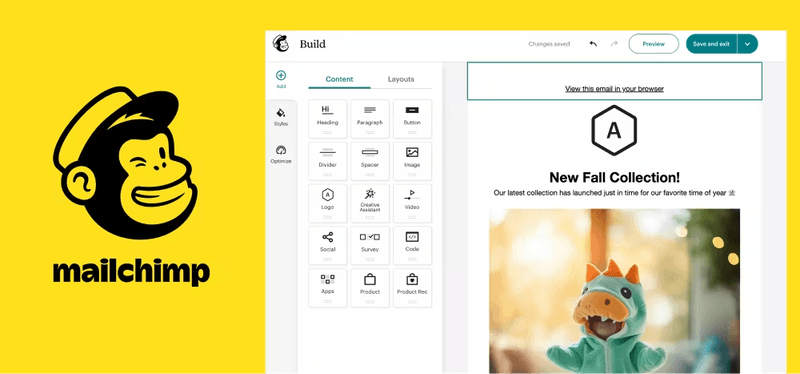
Mailchimp has grown far beyond newsletter sending and now offers marketing automation features that help businesses create personalized customer journeys across email, SMS, retargeting, and ecommerce touchpoints. It remains one of the most approachable platforms for teams that want to launch automations quickly.
Mailchimp is especially useful for smaller businesses and lean marketing teams that want templates, pre-built flows, and straightforward setup. It’s a practical choice when ease of use matters as much as automation depth.
Key Features
With Mailchimp, you can:
- Build customer journeys with automation flow templates
- Send trigger-based emails tied to signups, purchases, and customer activity
- Use transactional email and retargeting ads as part of your lifecycle marketing
- Personalize messaging with connected store and audience data
- Scale from simple welcome automations to more advanced journey-based workflows
Integrations
Mailchimp connects with a broad range of tools, including:
- E-commerce: WooCommerce, Squarespace Commerce, Shopify connectors
- Finance & Business Tools: QuickBooks Online
- Automation: Zapier and other connector platforms
- Analytics & Tracking: Website and campaign data integrations
- Social & Audience Growth: Facebook and Instagram connections
These integrations help you sync audience, store, and behavior data so your campaigns stay relevant and easier to manage.
15/ Omnisend
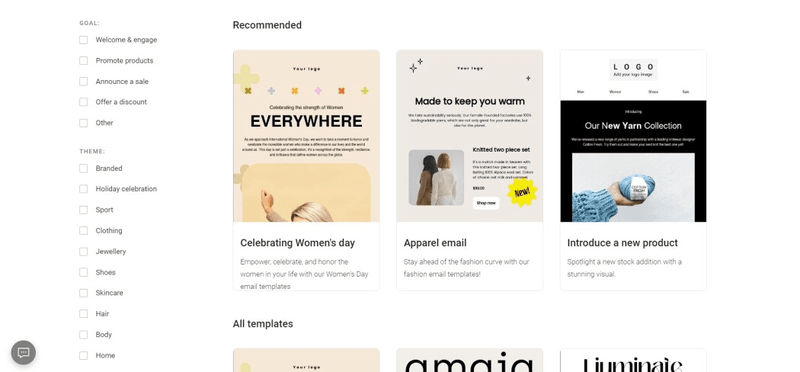
Omnisend is an ecommerce-focused marketing automation platform built for brands that want to combine email, SMS, and web push in one workflow. It’s designed to help online stores automate more of the customer journey without relying on multiple separate tools.
Its biggest advantage is how well it supports revenue-focused ecommerce use cases like welcome flows, cart recovery, browse abandonment, post-purchase campaigns, and personalized product recommendations. If the article needs a stronger ecommerce angle, Omnisend is a smart addition.
Key Features
With Omnisend, you can:
- Build omnichannel automations across email, SMS, and web push
- Use pre-built workflows for welcome, cart recovery, win-back, and post-purchase campaigns
- Personalize campaigns with dynamic content and customer behavior data
- Segment audiences based on browsing, purchase, and engagement activity
- Use AI support to speed up campaign creation and targeting
Integrations
Omnisend integrates with ecommerce and automation tools, including:
- E-commerce: Major store platforms plus custom ecommerce integrations via API
- Automation: Make, Zapier, and app marketplace connections
- Analytics & Product Data: Ecommerce and behavior-based data sources
- Messaging: Email, SMS, and push working inside the same automation builder
- Custom setups: API support for tailored workflows
These integrations make Omnisend a strong fit for ecommerce teams that want fast setup, revenue-focused automations, and a more unified multichannel workflow.
Conclusion: Choosing The Best Marketing Automation Platforms
Choosing the right marketing automation platforms in 2026 comes down to understanding your goals, your workflows, and the channels your team relies on most. Each tool in this list brings its own strengths, whether you need deep personalization, strong CRM alignment, multichannel publishing, or behavioral automation.
When you pick marketing automation platforms that fit the way your team works, you eliminate unnecessary manual tasks, improve consistency, and create a clearer path for scaling your marketing. Use this guide to narrow your options, focus on the features that matter most, and select a solution that supports your growth in the year ahead.